India Criticizes Pakistan at UN, Condemns Religious Persecution and Misuse of Faith for Political Gain
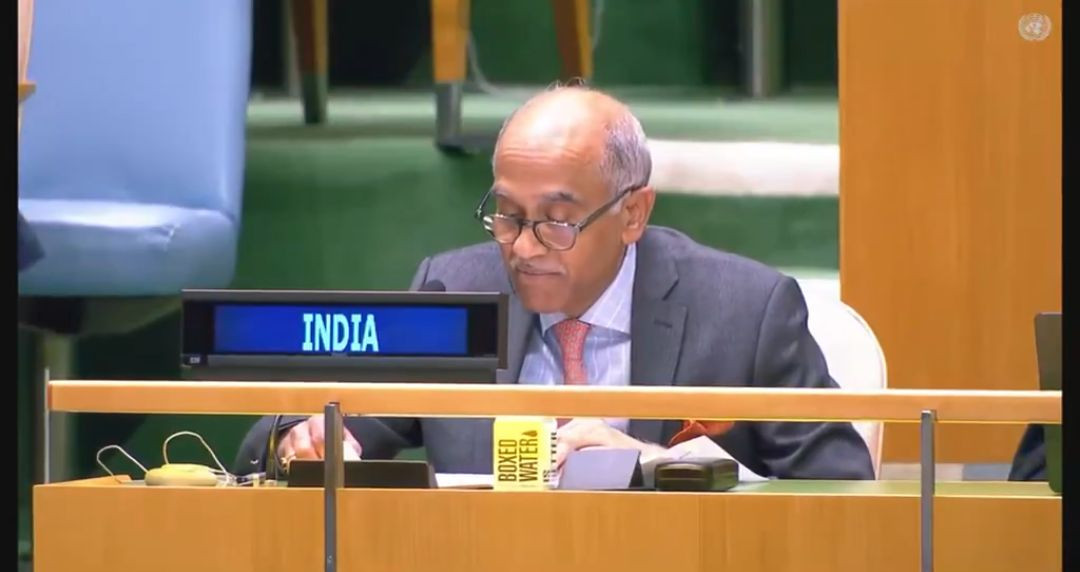
IIE DIGITAL DESK : New York and New Delhi, March 17: India has once again taken aim at Pakistan on the global stage, raising concerns over religious persecution and the misuse of faith for narrow political objectives. Addressing the United Nations, India’s Permanent Representative P. Harish emphasized the urgent need for the international body to acknowledge the growing trend of exploiting religious identity as a tool by both state and non-state actors.
Harish pointed to Pakistan as a striking example of this phenomenon, highlighting what he called the fabricated narratives of “Islamophobia” propagated by Islamabad to suit its regional agendas. He questioned the global community on how to classify the brutal persecution of the Ahmadiyya community in Pakistan, the forced mass deportation of vulnerable Afghan refugees, and the airstrikes carried out during the holy month of Ramadan, calling these acts a serious humanitarian and moral concern.
He further criticized Pakistan’s repeated attempts to manipulate the Organization of Islamic Cooperation (OIC) against India, accusing the neighboring country of raising baseless and false allegations targeting India. Harish stressed that Indian Muslims, including those in Jammu and Kashmir, independently choose their representatives and that there is no evidence of systemic discrimination or “Islamophobia” within India. According to him, India’s multicultural society is grounded in peaceful coexistence, with religious harmony as a cornerstone of national life.
Calling on the United Nations to focus its limited time and resources on fostering inclusive societies, Harish urged that such efforts should be anchored in equality, dignity, and the rule of law, ensuring protection and respect for people of all faiths. His remarks underscore India’s continued diplomatic push to highlight human rights concerns in Pakistan while projecting its own commitment to secularism and multiculturalism.
The address at the UN reiterates India’s position on regional stability and human rights, drawing attention to issues of religious persecution and the politicization of faith in South Asia, while seeking global recognition of India’s pluralistic social framework.
You might also like!