RBI Keeps Repo Rate Unchanged Again, Holds It Steady at 5.25 Percent
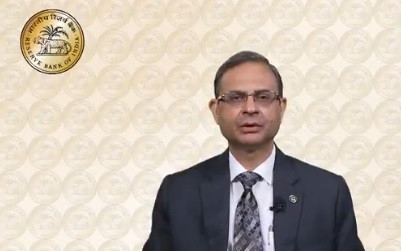
IIE DIGITAL DESK ; Mumbai, June 5: Bringing an end to widespread speculation, the Reserve Bank of India (RBI) on Friday announced its latest monetary policy decision, keeping the repo rate—the interest rate at which the central bank lends money to commercial banks—unchanged at 5.25 percent. The decision was announced by RBI Governor Sanjay Malhotra following the conclusion of the three-day Monetary Policy Committee (MPC) meeting.
The central bank also decided to retain its policy stance as “neutral,” indicating that it continues to keep both options open—either reducing or increasing interest rates in the future depending on evolving economic conditions. The move reflects the RBI’s cautious approach amid an uncertain global economic environment while maintaining focus on inflation and growth dynamics.
The media on Friday morning, RBI Governor Sanjay Malhotra stated that the Monetary Policy Committee had unanimously decided to keep the policy repo rate unchanged at 5.25 percent. He also revealed that the forecast for India’s real GDP growth has been revised downward from the earlier estimate of 6.9 percent to 6.6 percent.
The Governor emphasized that despite ongoing global uncertainties, the Indian economy remains in a relatively strong position. According to him, the world economy has been facing significant challenges over the past several months, including heightened uncertainty, disruptions in major trade routes and supply chains, increased market volatility, and a generally cautious business sentiment across industries.
“Even amid the current phase of global instability, the Indian economy is in a much better position,” Malhotra said. “Over the past few months, the global economy has been affected by severe uncertainty, disruptions in major trade routes and supply chains, heightened market volatility, and cautious business sentiment. At the outset, I would like to emphasize that despite these global challenges, the Indian economy continues to remain well placed.”
The RBI Governor also highlighted the inflation outlook, stating that consumer price inflation (CPI) remains below the central bank’s target threshold despite various global shocks. He attributed this resilience to the limited impact of external developments on domestic inflationary pressures.
Malhotra, preliminary projections indicate that headline inflation may move closer to the upper tolerance level during the third quarter of the current financial year. However, he expressed confidence that the impact of supply-side disruptions would begin to ease from the fourth quarter onward, helping stabilize price pressures.
“Despite global shocks, CPI inflation remains below the target level because their impact on domestic inflation has been limited,” he said. “While preliminary forecasts suggest that overall inflation could approach the tolerance band during the third quarter of this year, the effects of supply-side shocks are expected to moderate from the fourth quarter. At present, underlying inflationary pressures remain manageable.”
The RBI’s decision to maintain the repo rate reflects a balancing act between supporting economic growth and ensuring price stability. By keeping rates unchanged and retaining a neutral policy stance, the central bank has signaled its readiness to respond flexibly to changing domestic and international economic conditions while continuing to monitor inflation, growth, and financial stability closely.
Market participants, businesses, and borrowers will now closely watch future policy meetings for indications of the RBI’s next move, especially as global economic uncertainties and domestic growth challenges continue to evolve.
You might also like!