No Alliances, No Breakthrough? Vijay’s TVK Faces Political Isolation Ahead of Tamil Nadu 2026 Elections
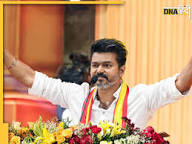
IIE DIGITAL DESK : Tamil Nadu’s high-stakes political landscape, timing and alliances often determine electoral success, and for actor-turned-politician Vijay, the early trajectory of his political party Tamilaga Vettri Kazhagam (TVK) is raising difficult questions about strategy, positioning, and missed opportunities ahead of the 2026 Assembly elections.
Analysts suggest that Vijay’s firm stance of not joining any alliance and his insistence on leading independently may have significantly narrowed his party’s political options at a crucial stage. In a state where coalition arithmetic plays a decisive role, the absence of alliances is increasingly being seen as a major disadvantage for TVK.
Despite entering politics at the peak of his cinematic popularity, Vijay was widely expected to emerge as a strong unifying force capable of attracting smaller regional players and forming a competitive coalition. His massive fan base among youth and women added to the expectation that TVK could quickly evolve into a central player in Tamil Nadu politics. However, political observers argue that instead of actively building alliances, the party has largely waited for others to come forward.
Tamil Nadu’s political environment has historically been dominated by alliance-driven strategies, primarily shaped by the Dravida Munnetra Kazhagam (DMK) and the All India Anna Dravida Munnetra Kazhagam (AIADMK), both of which have successfully built broad coalitions over decades. In this context, TVK’s reluctance to engage in structured negotiations is seen as a strategic gap.
Several potential alliances that could have strengthened TVK’s position appear to have slipped away. The Viduthalai Chiruthaigal Katchi (VCK), long known for its demand for power-sharing arrangements, was viewed as a possible early partner, but no concrete progress materialised. Similarly, the Indian National Congress briefly explored the idea of a new alignment, but ultimately chose to continue its existing arrangement with the DMK, reportedly leveraging the possibility of alternatives for better bargaining power.
Even the AIADMK, led by Edappadi K. Palaniswami, was at one point linked to exploratory signals of cooperation with TVK, with early political optics hinting at a possible convergence. However, those discussions did not develop further as the AIADMK recalibrated its strategy and re-engaged with the Bharatiya Janata Party. Meanwhile, the Desiya Murpokku Dravida Kazhagam (DMDK), once seen as another potential ally, has also moved closer to the DMK bloc, further limiting TVK’s options.
Political analysts note that Vijay’s early messaging, which emphasized power-sharing and reform within Tamil Nadu’s political system, initially had the potential to attract smaller parties dissatisfied with the dominance of the two Dravidian majors. However, the absence of sustained outreach and coalition-building efforts appears to have weakened that opportunity over time.
As the 2026 elections draw closer and nomination deadlines approach, TVK finds itself at a critical crossroads. While Vijay continues to command strong public appeal and significant grassroots enthusiasm, experts caution that electoral success in Tamil Nadu depends heavily on alliance structures rather than individual popularity alone.
The emerging question in political circles is whether TVK has already lost a crucial strategic window, or whether Vijay’s personal influence can still translate into electoral strength despite operating without formal allies in a deeply alliance-driven political landscape.
You might also like!