Operation Sindoor Reveals Future Warfare Will Look Very Different, Strategic Column Says
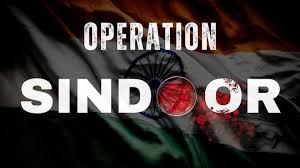
IIE DIGITAL DESK : The strategic analysis marking the one-year anniversary of Operation Sindoor argues that this pivotal military campaign has redefined India’s approach to conflict in the nuclear age, demonstrating that future wars will be fundamentally different from those of the past.
Operation Sindoor was launched by India in response to the brutal Pahalgam terror attack in April 2025, when militants killed 26 civilians in a tourist area of Jammu and Kashmir. India’s armed forces carried out a coordinated counter-strike against nine terror camps in Pakistan and Pakistan-occupied Kashmir, focusing on dismantling infrastructure linked to groups such as Jaish-e-Mohammed and Lashkar-e-Taiba.
The essay points out that the most significant lesson from Sindoor was not the sheer scale of force used, but the disciplined and strategic restraint with which it was applied. India chose not to escalate into a wider conventional war, despite having the capability to do so, instead opting for a precise and time-bound operation aimed at retribution rather than territorial gain. This demonstrated a nuanced understanding of escalation control under a nuclear overhang and set a possible template for managing complex, sub-conventional conflicts.
The analysis highlights how the Indian Armed Forces now integrate multi-domain capabilities — combining conventional strength with cyber, electronic warfare, surveillance, intelligence and precision strike systems — to compress decision-making timelines and enhance responsiveness. The operation also reflected improved jointness among the Army, Air Force and Navy, enabling a coordinated and agile response.
Another important takeaway was the role of civil-military convergence. Operation Sindoor involved not just the military but political leadership, diplomatic messaging and economic stability efforts, ensuring that India’s actions were seen internationally as measured and necessary. Despite some gaps in inter-agency communication, the operation underscored the importance of aligning national instruments of power toward clear strategic objectives.
Looking ahead, the column warns that future conflicts are likely to be shorter, sharper and multi-faceted, with urban areas, digital networks and societal cohesion as key battlegrounds alongside traditional theaters. Success in such environments will depend not only on military prowess but also on the ability to maintain normalcy, manage narratives and respond adaptively to evolving threats.
The legacy of Operation Sindoor, according to the analysis, lies in its demonstration that India can act with strategic precision and restraint, balancing aggression with political clarity while avoiding uncontrolled escalation. This, the column suggests, may be one of the most enduring lessons for future conflicts that will not resemble those of the past.
You might also like!