Passengers React to Hawker Eviction Drives at Sealdah and Howrah Stations—Relief Over Congestion, Concerns Over Livelihoods and Rehabilitation Demands Grow
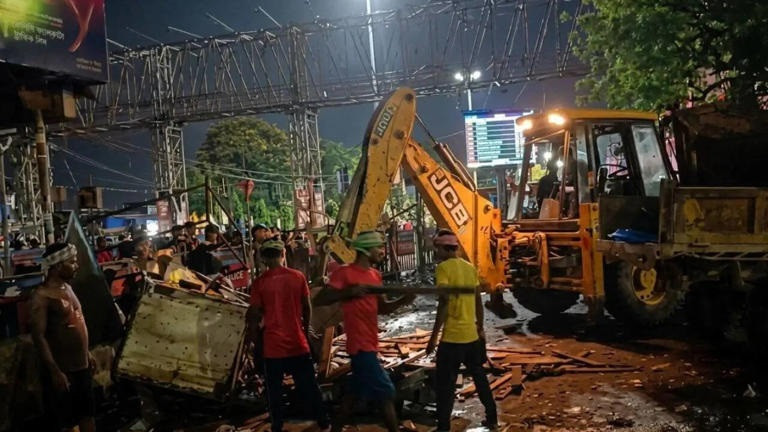
IIE DIGITAL DESK ; Kolkata, May 20: The recent large-scale eviction drive at two of Kolkata’s busiest railway terminals—Sealdah and Howrah—has triggered mixed reactions among passengers, with many welcoming the move while others raising concerns about the livelihoods of displaced hawkers and demanding proper rehabilitation measures.
Railway authorities, along with police forces, carried out a coordinated anti-encroachment operation across both stations, removing more than 500 illegal stalls and hawker setups. At Howrah station alone, over 150 unauthorized structures were demolished, while Sealdah witnessed the removal of around 300–350 stalls from platforms and surrounding areas.
The drive targeted encroachments along entry and exit points, footpaths, and platform zones that had long been congested due to informal vending activities.
Officials stated that the primary aim was to improve passenger movement, reduce overcrowding during peak hours, and enhance safety in some of the busiest railway hubs in eastern India.
A section of commuters has expressed relief following the eviction. Many passengers say station circulation areas now feel more open and easier to navigate, especially during rush hours when congestion was previously severe.
Frequent travelers noted that the removal of roadside stalls has improved access to platforms and reduced bottlenecks near ticket counters, escalators, and exits. Some also pointed out that food and goods vendors often blocked walkways, making movement difficult during peak train timings.
These passengers view the crackdown as a long-overdue step toward better station management and commuter convenience.
The action has also drawn criticism from others who argue that many of the evicted hawkers depend entirely on station trade for survival.
Several commuters and observers believe that while clearing illegal encroachments is necessary, the authorities should also provide structured rehabilitation or alternative vending zones for displaced vendors.
Critics argue that many of these stalls had existed for years and supported entire families, and sudden removal without proper resettlement could create severe financial hardship.
The situation has highlighted a broader policy challenge faced by urban transport hubs—balancing passenger convenience with informal livelihoods that have developed around high-footfall areas.
While railway authorities emphasize safety and decongestion, public opinion remains divided between supporting stricter enforcement and ensuring humane rehabilitation for affected vendors.
You might also like!