Bat for the Better on the BCCI and the RTI Act: Why Transparency in Cricket Administration Still Matters
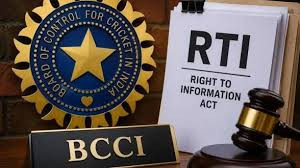
IIE DIGITAL DESK : The editorial examines the continuing legal and policy debate around whether the Board of Control for Cricket in India (Board of Control for Cricket in India) should come under the Right to Information (Right to Information Act, 2005) framework, especially after recent rulings that have once again placed the issue in focus. The Central Information Commission’s latest position that the BCCI is not a “public authority” under the RTI Act has reignited discussions on transparency, accountability, and governance in Indian cricket.
The heart of the issue is the definition of a “public authority” under Section 2(h) of the RTI Act, which includes bodies created by the Constitution, law, or government notification, or those substantially financed or controlled by the government. The editorial highlights that the BCCI, despite being the most influential and richest cricket board in the world, does not fall neatly into these categories because it is registered as a private society and operates with financial and administrative independence from the government.
The piece argues that legal technicalities alone do not resolve the broader question of public accountability. The BCCI performs functions that are undeniably public in nature, including selecting the national cricket team, managing international representation, and controlling cricket infrastructure and tournaments that carry national significance. Over the years, multiple committees and judicial observations, including the Lodha Committee reforms, have pointed out that such a body exercises quasi-public powers and therefore should be subject to greater transparency norms.
The editorial also draws attention to the repeated recommendations from institutions such as the Law Commission of India and earlier rulings of the Central Information Commission, which had previously classified the BCCI as a public authority before that interpretation was later overturned by courts and reconsidered in subsequent proceedings.
A key concern raised is the growing gap between public interest and institutional opacity. While the BCCI enjoys enormous influence over a sport that is deeply tied to national identity and public sentiment, its exemption from RTI obligations limits citizens’ ability to access information on decision-making processes, financial dealings, selection policies, and administrative accountability.
The editorial ultimately calls for a more balanced approach, suggesting that while the autonomy of sports bodies is important, it should not come at the cost of transparency. It argues that a reconsideration of the RTI framework or legislative clarification may be necessary to ensure that institutions exercising public functions are not completely insulated from public scrutiny.
You might also like!