The Timeless Story Behind Jagannath Rath Yatra: A Festival of Faith, Family and Equality
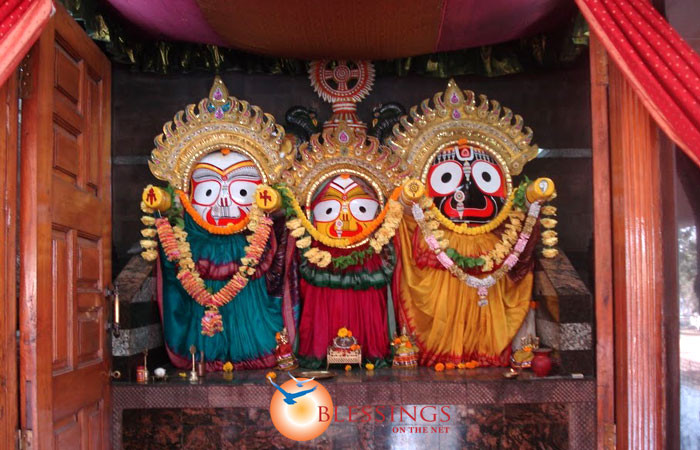
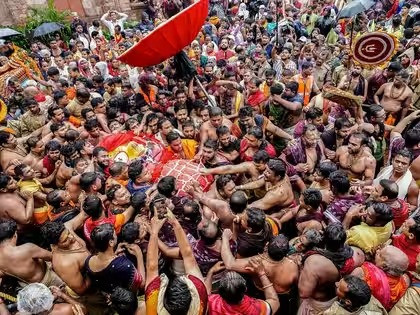
IIE DIGITAL: Every year, the sacred town of Puri in Odisha becomes the spiritual heart of India as millions of devotees gather to witness the grandeur of Jagannath Rath Yatra. One of the oldest and most celebrated festivals in Hinduism, Rath Yatra is much more than a spectacular procession of beautifully decorated chariots. It is a centuries old tradition that reflects devotion, humility, equality, compassion and the enduring importance of family bonds.
For many,
the festival is defined by the sight of three towering wooden chariots rolling
through the streets amidst the chants of devotees. Yet beneath this magnificent
celebration lies a profound spiritual philosophy. Rath Yatra reminds people
that God is not confined within the walls of a temple. Instead, the Lord steps
out to meet His devotees, offering His blessings to everyone without
distinction. It is this universal message that has made the festival an
enduring symbol of faith and inclusiveness.
A
Festival That Brings the Divine Closer to the People
Unlike
most religious festivals where devotees travel to temples in search of divine
blessings, Jagannath Rath Yatra follows a unique tradition. On this special
occasion, Lord Jagannath, accompanied by His elder brother Lord Balabhadra and
sister Goddess Subhadra, leaves the sanctum of the Jagannath Temple and travels
through the streets of Puri.
This
extraordinary custom carries a powerful message. It symbolises the belief that
divine grace should never remain limited to a sacred space. Instead, the Lord
Himself reaches out to His devotees, ensuring that every individual, regardless
of caste, wealth, occupation or social status, has the opportunity to receive
His blessings. The procession transforms the streets into a place of worship
where every devotee stands equal before the divine.
The Sacred Journey to Gundicha
Temple
The
destination of the annual procession is the Gundicha Temple, situated
about three kilometres from the Jagannath Temple. According to popular belief,
this temple represents the home of the deities' maternal aunt, lovingly known
as Mausi Maa.
The
journey reflects a deeply familiar Indian tradition of visiting relatives
during festivals and special occasions. Lord Jagannath, Lord Balabhadra and
Goddess Subhadra spend several days at Gundicha Temple before returning to
their original abode during the Bahuda Yatra, the return journey.
This
annual visit carries an emotional significance that extends beyond mythology.
It reminds devotees that family relationships deserve to be nurtured with
affection, respect and care. The festival beautifully bridges the divine and
the human by portraying the gods as members of a loving family who cherish
their relationships just as people do.
Three Magnificent Chariots with
Sacred Identity
One of
the most striking features of Rath Yatra is the presence of three enormous
wooden chariots, each designed exclusively for one deity.
Lord
Jagannath rides in Nandighosha, the tallest and grandest of the three
chariots. With sixteen massive wheels and a beautifully decorated canopy, it
represents majesty and divine authority.
Lord
Balabhadra travels in Taladhwaja, a fourteen wheeled chariot symbolising
strength, courage and protection. Its distinct colours and traditional
decorations set it apart from the others.
Goddess
Subhadra journeys in Darpadalana, also known as Devadalana, a
graceful twelve wheeled chariot that reflects compassion, harmony and maternal
care.
Each
chariot is adorned with colourful fabrics, intricate woodwork and sacred
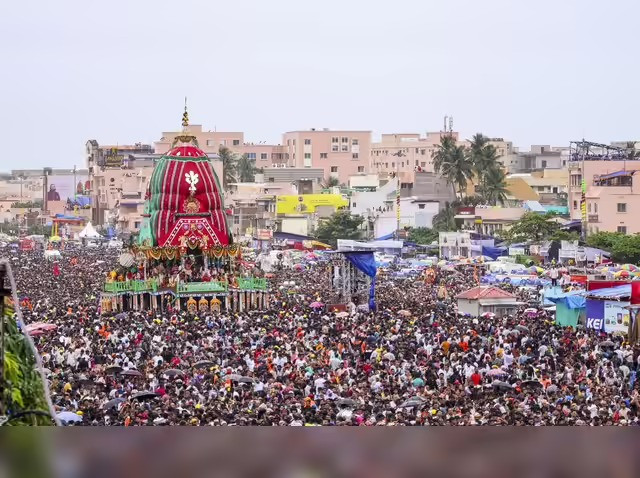
symbols. The sight of thousands of devotees pulling these massive structures
using thick ropes is among the most unforgettable moments of the festival.
Participating in this act is considered an expression of surrender, devotion
and spiritual merit.
Why New Chariots Are Built Every
Year?
A
remarkable aspect of Jagannath Rath Yatra is that the chariots are never
reused. Every year, three entirely new chariots are constructed from carefully
selected sacred neem wood.
The
process begins months before the festival and follows a highly disciplined
tradition preserved for centuries. Skilled artisans inherit the knowledge of
chariot making through generations and follow precise measurements prescribed
in ancient scriptures. Every stage of construction, from selecting the timber
to assembling the final structure, is accompanied by rituals and prayers.
This
annual renewal symbolises impermanence, regeneration and the continuous cycle
of creation. While the faith remains eternal, each year's celebration begins
with a fresh offering of devotion.
The Ritual That Places a King
Among Servants
Among the
most meaningful ceremonies of Rath Yatra is Chhera Pahanra, performed by
the Gajapati King of Puri.
Before
the chariots begin their journey, the king arrives dressed in ceremonial attire
carrying a golden broom. He respectfully sweeps the platforms of all three
chariots while sprinkling fragrant sandalwood water.
This
ritual is not merely symbolic. It reflects one of the festival's deepest
teachings that no earthly position is greater than service to the divine. Even
a king performs the duties of a humble servant before Lord Jagannath,
reinforcing the ideals of humility, equality and selfless devotion.
The Beloved Offering at Mausi Maa
Temple
An
equally cherished tradition unfolds during the return journey when Lord
Jagannath visits the Mausi Maa Temple.
Here, the
deity is offered Poda Pitha, a traditional Odia baked rice cake that is
believed to be one of His favourite delicacies. The offering represents the
warmth and affection of a maternal aunt welcoming her nephew with homemade
food.
Although
simple in preparation, Poda Pitha carries immense emotional significance. It
reminds devotees that food prepared with love becomes an expression of
devotion, hospitality and family affection.
A Festival That Celebrates
Equality
Perhaps
the greatest message of Jagannath Rath Yatra is its celebration of equality.
When the
chariots move through the streets, distinctions of caste, wealth, profession
and social identity disappear. People from every background join hands to pull
the ropes, chant the Lord's name and share the same spiritual experience.
For
centuries, Rath Yatra has stood as a reminder that the divine does not
discriminate. The blessings of Lord Jagannath belong equally to everyone,
making the festival one of India's most powerful symbols of unity and social
harmony.
More Than a Religious Celebration
To many
observers, Rath Yatra may appear to be a colourful procession filled with
music, rituals and celebration. Yet its deeper meaning extends far beyond
religious observance.
The
festival teaches that faith becomes meaningful when accompanied by compassion.
It reminds people that humility is greater than power, service is greater than
status and love is greater than division. Every ritual, every chariot and every
offering reflects values that remain relevant across generations.
This
timeless celebration continues to inspire millions because it presents
spirituality in its simplest form. Lord Jagannath does not wait for devotees to
come seeking Him. Instead, He steps outside His temple, travels among ordinary
people and reminds the world that divine love knows no barriers.
That
enduring message of accessibility, inclusiveness and universal compassion is
what transforms Jagannath Rath Yatra from a magnificent religious festival into
one of the most meaningful cultural and spiritual traditions in India.
You might also like!