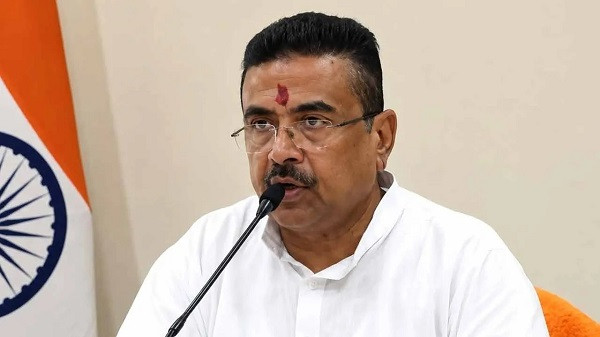
“Shyama Prasad Is Blessing Modi from Above”: Amit Shah Turns Emotional After BJP’s Historic Bengal Triumph
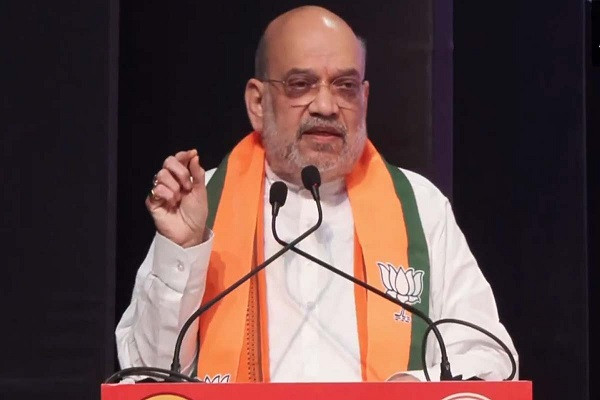
IIE DIGITAL DESK : Kolkata, May 8: The eve of the swearing-in ceremony of West Bengal’s first Bharatiya Janata Party government, Union Home Minister Amit Shah struck an emotional chord, invoking the legacy of Shyama Prasad Mukherjee and declaring that the ideological architect of the party was blessing Prime Minister Narendra Modi from wherever he may be. Speaking at a grand event at the Biswa Bangla Convention Centre, Shah described the BJP’s sweeping victory in Bengal as the fulfilment of a decades-old dream that began in 1951 with the formation of the Bharatiya Jana Sangh.
The BJP’s emphatic mandate of 207 seats in the 294-member Assembly marks a watershed moment in Bengal’s political history. For the first time since Independence, the party has secured a two-thirds majority in the state, breaking through a region long considered resistant to its ideological expansion. Shah said the victory was not merely electoral but civilisational, rooted in the vision of Mukherjee, who is often regarded as the ideological father of today’s BJP.
Mukherjee founded the Bharatiya Jana Sangh in 1951 after resigning from Prime Minister Jawaharlal Nehru’s cabinet in 1950 over differences related to national integration and policies concerning Jammu and Kashmir. His slogan of “One Nation, One Flag, One Constitution” became central to his political philosophy. Shah pointed out that this vision found concrete expression in 2019 when the Modi government abrogated Article 370 of the Constitution, revoking the special status of Jammu and Kashmir and reorganising it as a Union Territory. According to Shah, that move was a historic correction aligned with Mukherjee’s ideological commitment to national unity.
Mukherjee’s political journey remains etched in Indian political memory. In May 1952, he won the Lok Sabha election from South Kolkata with a resounding mandate, signalling early support for his nationalist platform. In 1953, he entered Jammu and Kashmir without a permit in protest against what he termed discriminatory policies and was subsequently arrested. He died under mysterious circumstances in custody on June 23 that year. The exact cause of his death remains unresolved, and over the decades, various conspiracy theories have surfaced, though none have been conclusively proven.
Drawing parallels between that turbulent chapter and the present political moment, Shah said the BJP’s Bengal victory represents the expansion of a seed planted more than seven decades ago. He traced the party’s gradual growth in the state, recalling how it won just three seats in the 2016 Assembly elections, surged to 18 Lok Sabha seats in 2019, and secured 77 Assembly seats in 2021 before finally crossing the decisive 200-seat mark this time. The 207-seat triumph, he asserted, was the culmination of sustained organisational effort, ideological commitment and the leadership of Modi.
The emotional tenor of Shah’s speech reflected the symbolic weight the party attaches to Bengal. Historically, the state had been a stronghold of the Left Front for over three decades, followed by the Trinamool Congress under Mamata Banerjee. For the BJP, establishing a government here represents not only territorial expansion but also validation of its long-term ideological narrative.
Shah framed the victory as a tribute to Mukherjee’s dream of a unified and culturally rooted India. He suggested that Bengal’s mandate signalled a shift in political consciousness, aligning the state with what he described as a broader national resurgence. The reference to Mukherjee’s legacy, particularly in relation to Article 370, served to underscore the BJP’s claim that it has delivered on foundational promises that date back to its ideological origins.
The state prepares for the swearing-in ceremony, party leaders are projecting the new government as the beginning of a transformative phase in Bengal’s governance. The celebratory mood within the BJP camp is infused with historical symbolism, linking present electoral success with past ideological struggles.
Shah and the BJP leadership, the Bengal verdict is more than a political conquest. It is portrayed as the realisation of a vision articulated in the early years of the Republic, when Mukherjee laid the foundation of a political movement that would evolve into one of India’s most dominant parties. In Shah’s words, the triumph in Bengal completes a circle that began in 1951, suggesting that the ideological journey from Jana Sangh to BJP has now reached one of its most significant milestones.
You might also like!