War Clouds Gather Over West Asia; US Strikes Iran, Tehran Launches Counterattacks
IIE DIGITAL DESK ; Washington, June 11: Tensions in West Asia have escalated sharply, raising fears of a wider regional conflict as the United States continues to carry out military strikes against Iran, while Tehran has responded with countermeasures and warnings of further retaliation. The rapidly deteriorating security situation has triggered alarm across the region, with several neighboring countries taking precautionary steps amid concerns that the confrontation could spiral into a broader war.
The escalating hostilities, Iran’s Islamic Revolutionary Guard Corps (IRGC) announced that the strategically crucial Strait of Hormuz has been closed to “all types of vessels.” The declaration has heightened concerns within the international community, given the waterway’s importance as one of the world's busiest routes for global energy shipments and commercial maritime traffic.
Regional tensions have also prompted neighboring countries to strengthen their security measures. Reports indicate that Kuwait has closed its airspace, while warning sirens and air raid alerts have been reported in Bahrain and Jordan as authorities remain on high alert amid fears of further military escalation. The developments have intensified concerns over the potential impact of the conflict on regional stability, trade routes, and international energy markets.
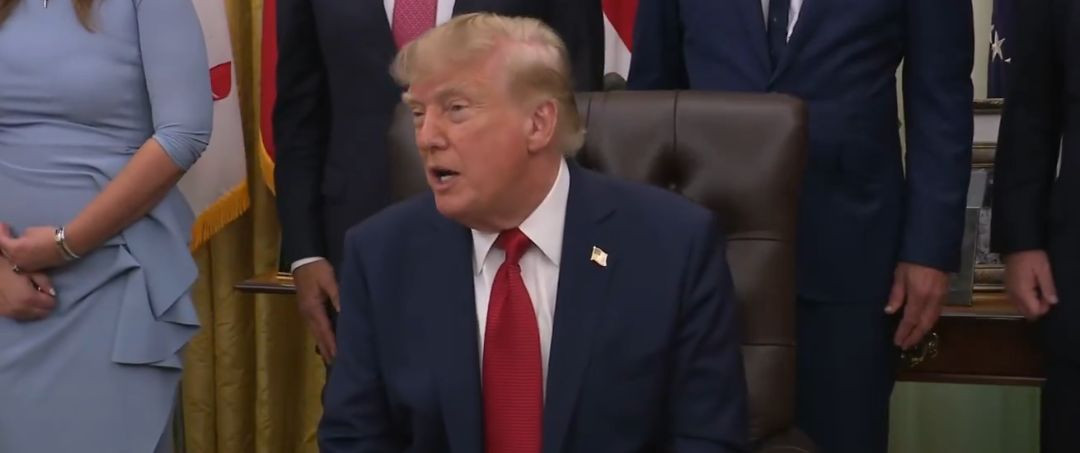
The ongoing military operations, US Defense Secretary Pete Hegseth stated that the United States Central Command (CENTCOM) would continue its activities in accordance with directives issued by President Donald Trump. Hegseth said that Washington was prepared to take strong action against Iran, arguing that Tehran had previously been offered opportunities to reach what he described as a favorable agreement but had declined to do so. According to the US administration, diplomatic avenues remained available, but military pressure would continue unless substantial progress was made.
Iran, has issued a stern warning of its own. Officials in Tehran have declared that any vessel attempting to cross the Strait of Hormuz in defiance of Iranian restrictions could face an appropriate response. The warning has raised concerns among international shipping operators and governments dependent on maritime trade through the region.
American officials have maintained that maritime traffic through the Strait of Hormuz remains operational and that shipping activity continues without major disruption. The conflicting claims from both sides have contributed to uncertainty regarding the actual situation in one of the world's most strategically significant waterways.
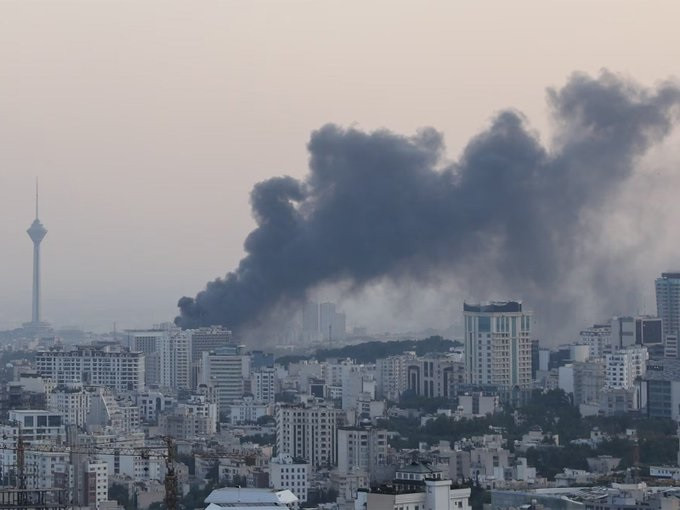
Reports from southern Iran suggest that multiple explosions have been heard across several locations, including Sirik, Minab, Bandar Abbas, and Qeshm Island. Witness accounts and local reports indicate heightened military activity throughout the region as both sides continue to exchange threats and demonstrate military readiness.
Iran has also activated its air defense systems in response to the ongoing missile strikes. Authorities in Tehran claim that defensive units have been deployed to intercept incoming projectiles and protect critical infrastructure. According to reports, repeated missile attacks have targeted the southern Iranian cities of Jask and Sirik, while additional strikes have reportedly been directed toward Qeshm Island in the Strait of Hormuz.
The developments mark one of the most serious confrontations between the United States and Iran in recent years. Analysts warn that any further escalation could have far-reaching consequences not only for West Asia but also for global energy supplies, international shipping routes, and broader geopolitical stability.
Military activity intensifies and diplomatic efforts appear increasingly strained, governments across the world are closely monitoring the situation, while calls for restraint and de-escalation continue to emerge from various international quarters.
You might also like!