
NASA Advances Artemis III Mission as Giant Lunar Rocket Takes Shape at Kennedy Space
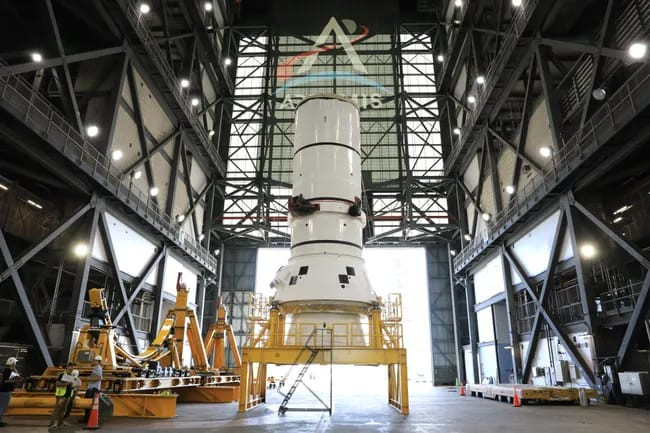
IIE DIGITAL: NASA has entered a crucial phase in preparing for its next major Artemis mission as the assembly of the Artemis III Space Launch System (SLS) rocket gains momentum at the Kennedy Space Center in Florida. A major section of the rocket’s powerful solid rocket booster has recently arrived at the agency’s Vehicle Assembly Building, bringing the launch vehicle one step closer to its first major integration activities.
The newly delivered component is the lower section of the left-hand solid rocket booster, one of two massive boosters that will be mounted on either side of the SLS rocket. These boosters will play a vital role during liftoff, producing a combined thrust of nearly 7.2 million pounds and contributing more than three-fourths of the rocket’s total launch power.
NASA confirmed that the arrival of the booster segment marks the beginning of a new stage in the rocket’s preparation. The agency said engineers will soon begin assembling the vehicle as they continue developing the systems required for future crewed lunar missions.
The Artemis III SLS rocket is being prepared for a mission currently expected to launch in the middle to later part of 2027. While the hardware is arriving steadily, the complete stacking of the rocket may still take time. NASA’s previous experience with Artemis II showed that assembling the full SLS vehicle required nearly a year after all major components reached the Vehicle Assembly Building.
The core stage of the Artemis III rocket reached the facility in May, although it arrived without its engine section. Engineers will need to complete additional integration work before the remaining rocket components can be placed together. During this period, more booster sections and other SLS hardware will continue to be transported to the facility.
NASA Administrator Jared Isaacman has stated that the agency is aiming to complete a wet dress rehearsal before the end of the year. The important pre launch test will allow teams to examine the rocket’s systems, fueling procedures and operational readiness before the actual mission.
The solid rocket boosters are among the most powerful elements of the SLS. Each booster stretches about 177 feet in height and is filled with a specially designed solid propellant mixture containing polybutadiene acrylonitrile, ammonium perchlorate and aluminum powder. Together, the two boosters weigh around 3.2 million pounds and provide the initial force needed to lift the enormous rocket away from Earth.
Unlike liquid fueled engines, solid rocket boosters cannot be switched off once they are ignited. Their performance and reliability are therefore essential during the first minutes of flight, when the rocket requires maximum power to escape Earth’s gravity.
Artemis III is an important step in NASA’s long term plan to return humans to the Moon and prepare for future deep space exploration. The mission will follow Artemis II, which carried four astronauts around the Moon in a historic test flight earlier in the program.
However, Artemis III will not yet include a lunar landing. Instead, astronauts aboard the Orion spacecraft will remain in low Earth orbit and spend around two weeks testing advanced rendezvous and docking procedures that will support upcoming Moon landing missions.
During the mission, NASA astronauts will interact with prototype lunar landers developed through partnerships with private space companies. The agency has selected Blue Origin and SpaceX to support future Artemis lunar operations, with both companies developing advanced landing systems.
The crew will first conduct operations with Blue Origin’s Blue Moon lander before moving on to a demonstration involving SpaceX’s Starship system. SpaceX plans to use a newer Starship Version 3 vehicle equipped with docking technology for the mission, although it will not yet include a complete crew cabin or full life support capability.
NASA’s ultimate goal is to use Artemis missions to establish a sustainable human presence around the Moon and create a foundation for future journeys deeper into space, including possible missions to Mars.
If the current schedule remains on track, Artemis IV is expected to become the first mission in the program to send astronauts to the lunar surface, with a planned launch date in late 2028. As rocket components continue arriving and assembly work progresses, Artemis III is emerging as a key demonstration mission that could define the future of human space exploration.
You might also like!