Nation

1 hour ago

Election Commission Selection Row : Government Asks Supreme Court to Back PM-Led Selection Mechanism
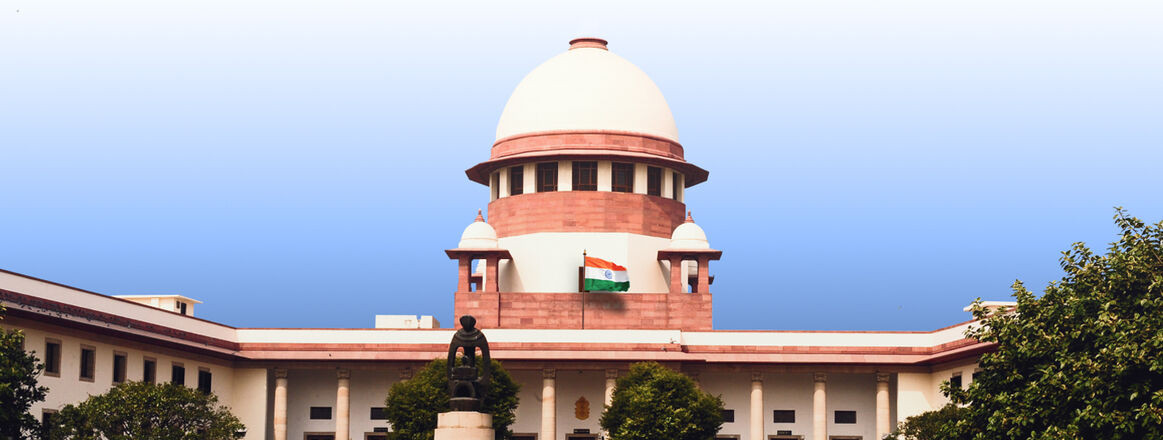
EC appointment case hearing


IIE DIGITAL: The Supreme Court on Thursday heard an intense debate over the process of appointing the Chief Election Commissioner (CEC) and Election Commissioners (ECs), with the Centre asserting that the Prime Minister’s constitutional office commands unquestionable trust and that excluding the Chief Justice of India (CJI) from the selection panel does not make the process unconstitutional.

Representing the Union government, Solicitor General Tushar Mehta argued that the Prime Minister’s decisions cannot be presumed to be biased simply because the executive holds a majority on the appointment committee. He maintained that such an assumption would undermine the dignity of a constitutional office and questioned whether similar doubts should then extend to the Prime Minister’s selection of Cabinet ministers.

The matter was heard by a bench of Justice Dipankar Datta and Justice Satish Chandra Sharma, which clarified that the issue before the court was not about doubting the Prime Minister’s integrity but about ensuring an appointment process that visibly upholds the Election Commission’s independence and public confidence.

The petitions challenge the Chief Election Commissioner and Other Election Commissioners (Appointment, Conditions of Service and Term of Office) Act, 2023, under which the Chief Justice of India was replaced by a Union Cabinet minister in the three-member panel responsible for selecting the CEC and ECs.

The court also examined petitions questioning the appointment of Gyanesh Kumar as Chief Election Commissioner while the constitutional validity of the 2023 law is still pending adjudication.

After hearing extensive submissions from both sides, the bench reserved its order on whether the dispute raises a substantial constitutional issue requiring reference to a five-judge Constitution Bench.

The Centre, supported by Attorney General R. Venkataramani, favoured such a reference. However, petitioners represented by advocate Prashant Bhushan and senior lawyers Vijay Hansaria and Gopal Sankaranarayanan argued that no fresh constitutional interpretation was necessary.

They relied on the Supreme Court’s Anoop Baranwal judgment of March 2023, which had directed that, until Parliament enacted a law, appointments to the Election Commission should be made by a committee comprising the Prime Minister, the Chief Justice of India and the Leader of the Opposition. According to the petitioners, Parliament’s subsequent decision to replace the CJI with a Cabinet minister weakened institutional checks and contradicted the spirit of that ruling.

Defending the legislation, Mehta argued that the Baranwal verdict was only an interim arrangement designed to bridge a legislative vacuum. Once Parliament enacted the 2023 law, he said, that temporary mechanism naturally ceased to operate.

Justice Datta questioned whether the independence of the Election Commission demanded a process that not only remained fair but also appeared fair. In response, Mehta said courts should not assume that constitutional authorities would misuse their powers merely because the executive enjoys numerical strength on the panel.

He further contended that the judiciary should not invalidate legislation based on hypothetical concerns or presume mala fide intentions on the part of constitutional functionaries.

During the hearing, Justice Datta remarked that there was no reason to distrust the Prime Minister, while also pointing out that the Chief Justice continues to be part of selection committees for several other important constitutional and statutory appointments, including those of the CBI Director and the Lokpal.

Attorney General Venkataramani defended Parliament’s authority to legislate, arguing that the validity of the law should not be judged on speculative apprehensions. Any allegation regarding the Election Commission’s independence, he said, must be examined on concrete facts rather than assumptions.

The petitions have been filed by Madhya Pradesh Congress leader Jaya Thakur, the Association for Democratic Reforms (ADR), Trinamool Congress MP Mahua Moitra and others. The case, which has witnessed nearly 15 adjournments over the past year, now awaits the Supreme Court’s decision on its future course.

You might also like!