India Signs Trade Agreements with 38 Countries, Targets $85 Trillion Market: Piyush Goyal
IIE DIGITAL DESK ; New Delhi, October 14: India is stepping up efforts to expand its global trade network, strengthen economic partnerships and create greater opportunities for Indian businesses in international markets. Union Commerce and Industry Minister Piyush Goyal said on Wednesday that India had entered into preferential trade agreements with 38 developed countries over the past four to four-and-a-half years, marking a significant expansion of the country's global economic engagement. The government is now aiming to increase the combined gross domestic product (GDP) of economies covered by India's trade agreements from around $70 trillion to approximately $85 trillion.
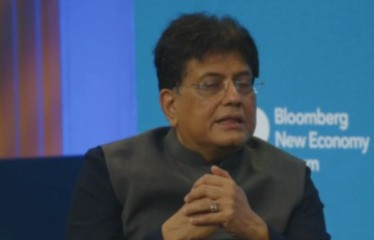
Speaking at the Bloomberg New Economy Forum in Delhi, Goyal highlighted the transformation in India's international trade relationships and outlined the government's ambition to secure wider access to global markets. He said India was pursuing a two-way approach by opening up its domestic market to international partners while simultaneously working to improve access for Indian businesses, exporters and manufacturers in overseas markets.
Goyal, the combined GDP of economies offering India preferential market access stood at approximately $10 trillion before 2014. That figure has since increased substantially, with the combined economic size of countries covered by India's trade agreements reaching around $70 trillion. Against the backdrop of a global economy with a total GDP of approximately $115 trillion, India is working towards bringing economies worth nearly $85 trillion within the ambit of its trade agreements.
The proposed expansion is expected to strengthen India's position in international commerce and provide domestic industries with access to a much wider consumer base. Greater market access could also create opportunities for Indian manufacturers, exporters and businesses seeking to increase their international presence. By developing trade relationships with a broader range of economies, India aims to diversify its export destinations and strengthen its participation in global supply chains.
Goyal also indicated that discussions were continuing with several countries and regional economic groupings to expand India's trade partnerships further. These include Canada, Mexico, additional countries belonging to the Gulf Cooperation Council (GCC), the Southern African Development Community, Mercosur and various Eurasian countries. The government is also exploring opportunities to deepen economic cooperation with other international partners.
The ongoing negotiations reflect India's broader effort to establish stronger commercial relationships across different regions rather than depending on a limited number of markets. Expanding trade engagement with countries in North America, the Gulf region, Africa, South America and Eurasia could help Indian businesses explore new destinations for their products and services while creating additional avenues for economic cooperation.
Emphasising the importance of trust in international commerce, Goyal said India was keen to work closely with its foreign partners. However, he stressed that such cooperation must be built on mutual confidence and reliability. According to the minister, sustainable trade partnerships should enable participating countries to work together and develop integrated supply chains based on complementary strengths and shared economic interests.
The minister's remarks also highlighted India's attempt to strike a balance between economic self-reliance and international cooperation. While the country intends to strengthen its domestic capabilities in strategically important sectors, it also recognises the value of working with reliable international partners to improve production efficiency, expand trade and build resilient supply networks.
India's approach, as outlined by Goyal, is centred on creating an economic framework in which domestic manufacturing capabilities and international partnerships reinforce each other. The objective is to ensure that the country can protect its interests in critical sectors without missing opportunities arising from global trade and investment.
Reliable supply chains have become increasingly important as countries seek to manage disruptions, diversify sources of essential goods and improve the resilience of their economies. In this context, India is looking to cooperate with trusted trading partners to improve efficiency and ensure a more dependable flow of goods, technology and industrial inputs.
Goyal's comments underline the government's ambition to increase India's integration with the global economy while creating better opportunities for domestic businesses. The expansion of trade agreements is intended to provide Indian companies with access to larger markets, strengthen export competitiveness and encourage closer economic ties with partner countries.
With negotiations continuing across several regions, India is seeking to widen the geographical reach of its trade network. The target of covering economies with a combined GDP of approximately $85 trillion represents a major step in that effort. The challenge ahead will be to translate these partnerships and negotiations into tangible gains for Indian exporters, manufacturers and businesses while maintaining a balance between global integration, supply-chain security and self-reliance in critical sectors.
You might also like!