Ballots Across Bengal: 152 Seats Go to Polls in Crucial First Phase of Assembly Elections
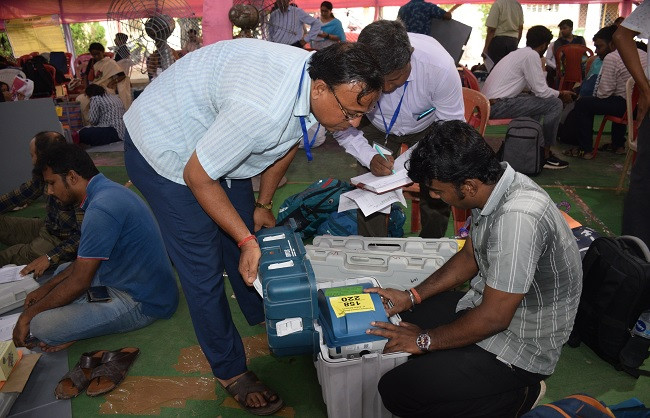
IIE DIGITAL DESK : April 22: The stage is set for a decisive electoral battle in West Bengal as the first phase of the Assembly elections will be held on Thursday, covering 152 constituencies spread across 16 districts. With political parties making their final appeals and the Election Commission putting elaborate arrangements in place, more than 3 crore 60 lakh 77 thousand voters are poised to determine the political fate of 1,478 candidates in this crucial opening round.
Polling will commence at 7 am and continue until 6 pm under tight security and extensive administrative supervision. Authorities have emphasized that all necessary measures have been undertaken to ensure a free, fair, and peaceful voting process. The state is witnessing a two-phase election this time, heightening the significance of the first round as it covers a large and diverse geographical expanse, ranging from the hills of North Bengal to the industrial belts and tribal regions of the western districts.
North Bengal, the electoral battle spans the districts of Cooch Behar, Alipurduar, Jalpaiguri, Kalimpong, Darjeeling, North Dinajpur, South Dinajpur and Malda. Cooch Behar district alone accounts for nine constituencies, including Mekhliganj, Mathabhanga, Cooch Behar North, Cooch Behar South, Sitalkuchi, Sitai, Dinhata, Natabari and Tufanganj. In Alipurduar, five seats—Kumargram, Kalchini, Alipurduar, Falakata and Madarihat—will witness voting. Jalpaiguri district will see polling in seven constituencies: Dhupguri, Maynaguri, Jalpaiguri, Rajganj, Dabgram-Phulbari, Mal and Nagrakata. Kalimpong district has a single constituency, Kalimpong, while Darjeeling district includes five seats—Darjeeling, Kurseong, Matigara-Naxalbari, Siliguri and Phansidewa.
North Dinajpur has nine constituencies going to polls, namely Chopra, Islampur, Goalpokhar, Chakulia, Karandighi, Hemtabad, Kaliaganj, Raiganj and Itahar. In South Dinajpur, voting will take place across six seats: Kushmandi, Kumarganj, Balurghat, Tapan, Gangarampur and Harirampur. Malda district features twelve constituencies, including Habibpur, Gazole, Chanchal, Harishchandrapur, Malatipur, Ratua, Manikchak, Maldah, English Bazar, Mothabari, Sujapur and Baishnabnagar.
Murshidabad, one of the largest districts in the state in terms of Assembly representation, accounts for 22 constituencies in this phase. These include Farakka, Samserganj, Suti, Jangipur, Raghunathganj, Sagardighi, Lalgola, Bhagabangola, Raninagar, Murshidabad, Nabagram, Khargram, Burwan, Kandi, Bharatpur, Rejinagar, Beldanga, Berhampore, Hariharpara, Naoda, Domkal and Jalangi.
The southern and western parts of the state, the electoral spotlight will also fall on East Midnapore, West Midnapore, Jhargram, Purulia, Bankura, Paschim Bardhaman and Birbhum. East Midnapore’s sixteen constituencies include Tamluk, Panskura East, Panskura West, Moyna, Nandakumar, Mahisadal, Haldia, Nandigram, Chandipur, Patashpur, Kanthi North, Bhagabanpur, Khejuri, Kanthi South, Ramnagar and Egra. West Midnapore contributes fifteen constituencies such as Dantan, Keshiary, Kharagpur Sadar, Narayangarh, Sabang, Pingla, Kharagpur, Debra, Daspur, Ghatal, Chandrakona, Garbeta, Salboni, Keshpur and Medinipur.
Jhargram district has four seats—Nayagram, Gopiballavpur, Jhargram and Binpur—while Purulia has nine constituencies including Bandwan, Balarampur, Baghmundi, Joypur, Purulia, Manbazar, Kashipur, Para and Raghunathpur. Bankura district will vote in twelve constituencies such as Saltora, Chhatna, Ranibandh, Raipur, Taldangra, Bankura, Barjora, Onda, Bishnupur, Kotulpur, Indas and Sonamukhi.
Paschim Bardhaman’s nine constituencies—Pandaveswar, Durgapur East, Durgapur West, Raniganj, Jamuria, Asansol South, Asansol North, Kulti and Barabani—reflect the industrial heartland’s political pulse. Birbhum rounds out the first phase with eleven constituencies: Dubrajpur, Suri, Bolpur, Nanoor, Labhpur, Sainthia, Mayureswar, Rampurhat, Hansan, Nalhati and Murarai.
The countdown ends and campaigning gives way to the silence period, the focus now shifts to the electorate. With millions stepping out to cast their votes across urban centers, rural heartlands, tea gardens, hill towns and industrial belts, the first phase is expected to set the tone for the rest of the election. All eyes will be on voter turnout and early trends, as West Bengal embarks on yet another defining democratic exercise.
You might also like!