Future Conflicts Will Not Be Limited to Traditional Battlefields: Army Chief
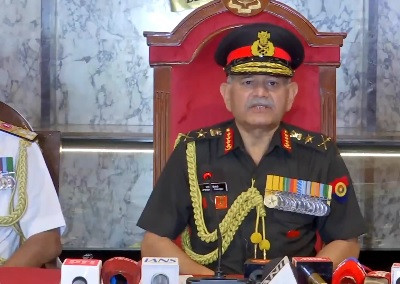
IIE DIGITAL DESK ; Pune, May 30: Chief of the Army Staff General Upendra Dwivedi made a significant observation on the evolving nature of modern warfare, stating that future conflicts will no longer remain confined to conventional battlefields. He emphasized that wars of the future will be fought across multiple domains, including land, air, sea, space, cyber, electromagnetic, and cognitive spheres. The Army Chief also revealed that Operation Sindoor is still ongoing and that, although a temporary ceasefire is currently in place, the Indian Armed Forces are actively preparing for what he described as “Operation Sindoor 2.0.”
General Upendra Dwivedi made these remarks on Saturday while attending the Passing Out Parade (POP) of the 150th Course at the National Defence Academy (NDA) in Khadakwasla, Pune. The ceremony marked a significant milestone for 355 cadets who officially joined India’s armed forces through one of the country’s most prestigious military training institutions.
The gathering, the Army Chief highlighted the rapidly changing character of warfare in the modern era. He explained that future conflicts would extend far beyond traditional combat zones and would involve simultaneous engagements across various strategic domains. According to him, military operations in the coming decades will require armed forces to operate effectively not only on the ground but also in the skies, oceans, outer space, cyberspace, and the information environment.
Referring to Operation Sindoor, General Dwivedi said that the operation had demonstrated India’s determination and the capability of its armed forces to deliver a measured, precise, and purpose-driven response whenever required. He noted that the operation showcased the effectiveness of integrated military planning and highlighted the importance of real-time intelligence gathering, precision targeting, strong air defence systems, secure communications networks, and seamless coordination among different branches of the armed forces.
The Army Chief stated that the Indian military fully recognizes the transformational changes taking place in global warfare. He said that the armed forces are adapting to these developments and are actively working toward becoming a future-ready force capable of addressing emerging security challenges. General Dwivedi emphasized that the current decade represents a period of transformation for India’s military and that young officers and soldiers will play a central role in shaping the armed forces of the future.
He further underlined the growing importance of information warfare in modern conflicts. According to General Dwivedi, information warfare becomes successful when an entire nation stands united and maintains confidence in the institutions and individuals responsible for disseminating information. He stressed that trust among citizens, institutions, and stakeholders is a critical factor in ensuring national resilience during times of conflict.
The Army Chief expressed confidence that countries whose people trust one another and have faith in their national institutions are more likely to succeed during periods of crisis and war. He said that unity, confidence, and coordinated action across all sectors of society are becoming increasingly important components of national security in an era where warfare extends beyond physical battlefields.
The Passing Out Parade at the National Defence Academy served not only as a celebration of the graduation of 355 cadets but also as a platform for the Army Chief to outline his vision of future warfare and India's ongoing efforts to modernize its defence capabilities. His remarks reflected the Indian military’s focus on technological advancement, joint-force integration, cyber preparedness, and information dominance as key elements of future national defence strategy.
You might also like!