Nepal Floods: Death Toll Rises to 469, 1,000 Still Missing; Kathmandu Says No to Foreign Rescue Teams Despite Receiving Aid
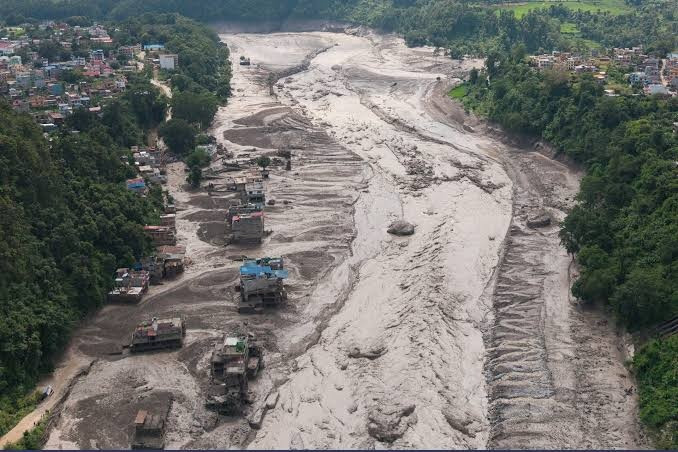
IIE DIGITAL DESK ; Kathmandu, August 28: Nepal is facing one of the most devastating disasters in recent Himalayan history after a catastrophic flash flood and landslide near the Nepal-Tibet border reportedly killed 469 people, while around 1,000 others remain missing. Rescue teams are working around the clock to search for survivors trapped beneath mud, rocks and debris, but the difficult mountainous terrain and extensive damage to roads and bridges are severely hampering relief and rescue operations.
Heavy machinery, helicopters and sniffer dogs have been deployed in the affected areas as rescuers continue to clear massive quantities of mud, stones and landslide debris. The scale of destruction has made access to several remote locations extremely difficult, with damaged transport links preventing rescue teams and essential supplies from reaching some of the worst-hit areas quickly.
The situation has been further complicated by the formation of potentially dangerous artificial lakes in the upper Himalayan region. China has reportedly issued a warning over a hazardous lake created after the flow of the Bhotekoshi River was obstructed. Authorities fear that the lake could burst at any time, sending a huge volume of water downstream and triggering another major disaster in lower-lying areas.
There are concerns that the danger could increase further if substantial quantities of water accumulate over the next three days. A sudden release of the stored water could produce another powerful flood, threatening communities already struggling to recover from the initial catastrophe.
Experts cited in the report believe the disaster may have been triggered after a massive quantity of ice and rock from a glacier collapsed, possibly following seismic activity or another geological event, and crashed into a lake in the Rasuwagadhi area. The impact is believed to have generated an exceptionally destructive flash flood in the region close to Nepal’s border with Tibet.
The disaster has been described as one of the most severe natural catastrophes to hit the Himalayan region in recent years. The combination of glacial instability, landslides, flooding and difficult terrain has created an extremely challenging environment for rescue workers.
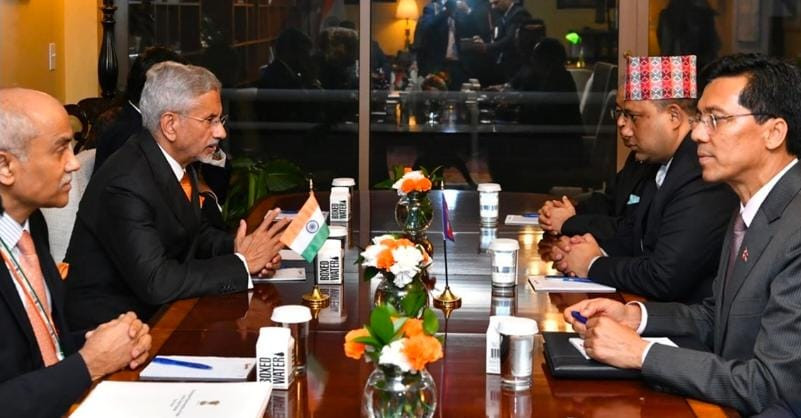
Several countries, including India, China, the United States, Britain, Japan, South Korea, Sri Lanka and Bangladesh, reportedly offered to send specialised rescue teams to Nepal. Kathmandu, however, has declined the offers, maintaining that the country’s own army and police forces are capable of conducting the rescue operation.
Nepal’s decision is reportedly influenced by its experience following the devastating 2015 earthquake, when the arrival of large numbers of foreign rescue teams created significant coordination problems. Officials have therefore chosen to rely primarily on domestic security and emergency services for the rescue effort during the current crisis.
Although Kathmandu has declined foreign rescue teams, Nepal is accepting humanitarian assistance, relief materials and other forms of support from abroad. India has already sent 47.5 tonnes of relief supplies to the disaster-hit country as part of its assistance.
The disaster has also raised serious concerns over the safety of foreign nationals who were travelling or staying in the affected regions. According to a report by The Kathmandu Post, at least 517 foreign nationals are still reported missing. The missing include 178 Indian citizens, 65 Americans, 51 Malaysians, 53 Ukrainians, 33 British nationals, 35 Australians and 25 Canadians. Around 100 Chinese nationals are also reportedly unreachable.
The large number of missing foreign nationals has prompted diplomatic missions to intensify efforts to establish contact with their citizens. The Indian Embassy in Kathmandu has opened emergency helpline numbers to assist Indian nationals and their families seeking information about relatives who may have been caught in the disaster.
The emergency numbers provided for Indian citizens are +977 985 131 6807, +977 970 910 7500 and +977 981 032 6117. The helplines are intended to assist with emergency information and coordination for Indians affected by the disaster.
The catastrophe has also drawn an expression of grief from US President Donald Trump. Describing the situation as extremely tragic and devastating, Trump said the destruction had been so severe that even strong buildings appeared to have been swept away like matchsticks. The United States is sending relief assistance to Nepal and, according to the report, is maintaining regular contact with the Nepalese government over the search for American citizens who remain missing.
The continuing threat from unstable slopes and newly formed water bodies means that the rescue operation is being conducted under extremely difficult circumstances. Even after the first wave of flooding, authorities remain concerned that another sudden release of water could strike downstream settlements with little warning.
For families waiting for information about missing relatives, the situation remains deeply uncertain. Rescue workers are continuing searches in areas covered by mud and debris, while helicopters are being used where roads and bridges have become inaccessible. Sniffer dogs and heavy equipment are also being deployed to locate possible survivors beneath collapsed structures and landslide material.
The disaster has once again highlighted the vulnerability of Himalayan communities to increasingly complex natural hazards. Glacial instability, landslides, sudden flooding and fragile mountain infrastructure can combine to produce devastating consequences, particularly in remote areas where emergency access is limited.
For Nepal, the immediate priority remains saving lives, locating missing people and preventing a second disaster from the potentially unstable lakes and blocked river channels. While Kathmandu has chosen to conduct the rescue operation largely through its own army and police forces, international assistance in the form of relief supplies continues to reach the country.
As rescue operations enter a critical phase, the fate of hundreds of missing people remains unknown. With the reported death toll at 469 and approximately 1,000 people still missing, Nepal faces a massive humanitarian challenge. The continuing threat from artificial lakes and unstable Himalayan terrain has added another layer of urgency to an already unprecedented rescue and relief operation.
You might also like!