Chief Minister Suvendu Adhikari’s Message on Sanskrit Day
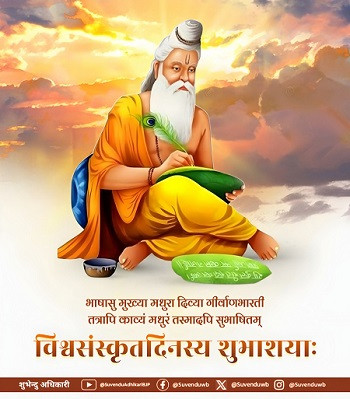
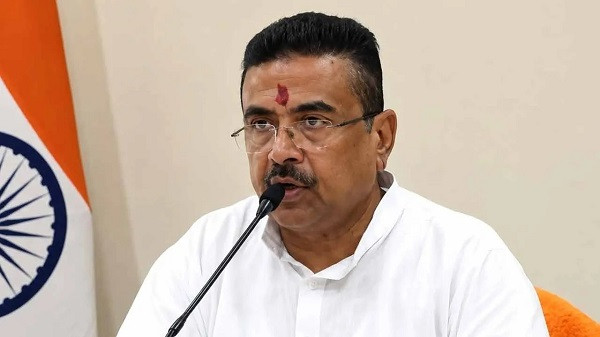
IIE DIGITAL DESK ; Kolkata, August 28: West Bengal Chief Minister Suvendu Adhikari on Friday extended his greetings and shared a message highlighting the cultural and intellectual importance of the Sanskrit language on the occasion of Sanskrit Day.
In a post on X, Adhikari described Sanskrit as far more than simply a language, calling it an enduring and invaluable repository of Indian culture, civilisation, philosophy and knowledge. His message focused on the historical significance of Sanskrit and its deep connection with India’s literary, spiritual and intellectual traditions.
“Sanskrit is not merely a language; it is an imperishable and invaluable treasure of Indian culture, civilisation, philosophy and knowledge,” the Chief Minister wrote in his message.
Highlighting the language’s contribution to India’s ancient intellectual traditions, Adhikari referred to major Sanskrit works including the Vedas, Upanishads, Ramayana and Mahabharata. He also pointed to the role of Sanskrit in areas of knowledge such as mathematics, astronomy and medicine, emphasising that the language has historically been closely associated with the development and preservation of knowledge in the Indian subcontinent.
The Chief Minister also quoted the Sanskrit expression “Yatra Vishwam Bhavatyekanidam”, conveying the idea of the entire world becoming one home. He said that this universal message continues to resonate through Sanskrit even today.
Adhikari’s message placed particular emphasis on the responsibility of the present generation to preserve and promote the ancient language. He called upon people to use the occasion of Sanskrit Day as an opportunity to renew their commitment to introducing Sanskrit and its rich heritage to younger generations.
The message comes amid continued discussions about the preservation of India’s classical languages and the importance of ensuring that ancient literary and intellectual traditions remain accessible to young people. Sanskrit, regarded as one of the oldest classical languages associated with Indian civilisation, has played a significant role in the development of literature, philosophy, religious thought and several traditional fields of learning.
Through his Sanskrit Day message, Adhikari sought to underline the broader cultural value of the language rather than viewing it solely through the lens of linguistic heritage. By referring to texts ranging from the Vedas and Upanishads to the Ramayana and Mahabharata, he highlighted the extensive literary tradition preserved through Sanskrit over centuries.
His reference to mathematics, astronomy and medicine also drew attention to the historical use of Sanskrit as a medium for recording and transmitting knowledge across generations. Numerous classical works in these fields were composed or preserved in Sanskrit, making the language an important part of India’s intellectual history.
The Chief Minister’s call to connect younger generations with Sanskrit reflects the challenge of maintaining interest in classical languages in an era dominated by modern communication and rapidly changing educational priorities. His message suggested that preserving the language requires not only remembering its historical significance but also ensuring that young people have opportunities to engage with its literature, ideas and traditions.
The Sanskrit Day message also highlighted the universal philosophical themes found in Sanskrit literature. The reference to the idea of the world as one home presented the language as a vehicle for ideas that extend beyond linguistic and geographical boundaries.
As Sanskrit Day was observed on Friday, the Chief Minister’s remarks placed renewed emphasis on the cultural, philosophical and intellectual legacy associated with the language. He urged people to make the preservation and transmission of this heritage a shared responsibility.
Concluding his message, Adhikari called for a commitment to taking the ancient and richly developed language to the new generation. His appeal was framed not simply as an effort to preserve an old language but as an attempt to keep alive a vast body of cultural and intellectual knowledge for the future.
You might also like!