Twin OBC Amendment Bills Tabled, Assembly Erupts in Heated Debate as BJP Raises ‘Point of Order’
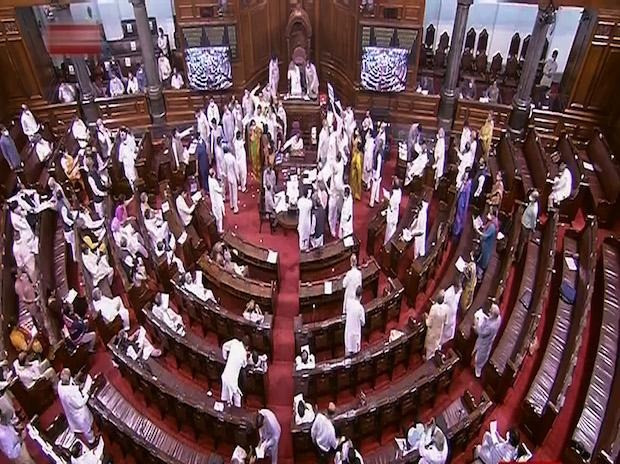
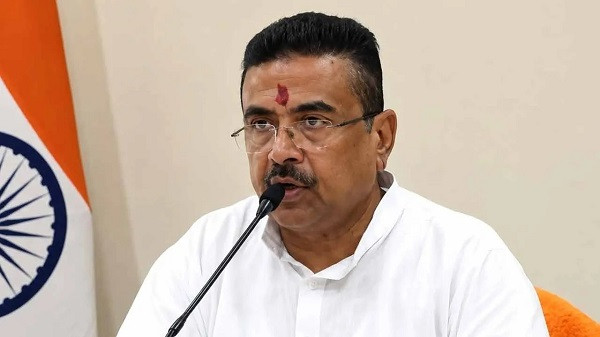
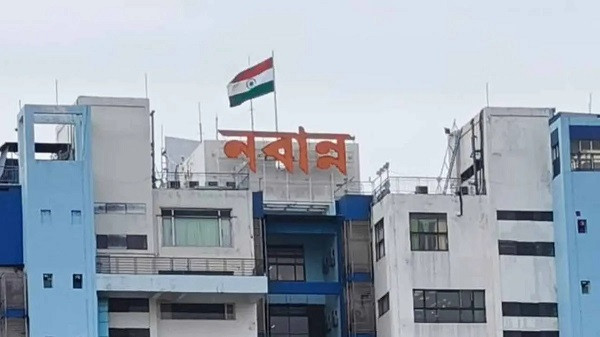
IIE DIGITAL DESK ; Kolkata, June 29: The West Bengal Legislative Assembly witnessed an extraordinary and politically charged session on Monday as the House debated a series of significant legislative and policy matters. The proceedings were marked by intense exchanges over two amendment bills concerning Other Backward Classes (OBC) reservation and the State Backward Classes Commission, while the Bharatiya Janata Party (BJP) created a stir by raising a Point of Order over controversial remarks allegedly made against Chief Minister and Home Minister Suvendu Adhikari. The session also gained prominence due to the Chief Minister's much-anticipated statement on the Uniform Civil Code (UCC).
The day's legislative business began with Minister for Backward Classes Welfare Gaurishankar Ghosh formally introducing The West Bengal Backward Classes (Amendment) Bill, 2026 and The West Bengal Commission for Backward Classes (Amendment) Bill, 2026 before the Assembly. After prolonged discussions and voting, both amendment bills were passed by the House, paving the way for significant changes to the state's OBC reservation framework and the functioning of the West Bengal Backward Classes Commission.
The state government, the amendments are intended to make the reservation system more transparent, legally sustainable and administratively effective. Introducing the legislation, Gaurishankar Ghosh stated that the primary objective was to restructure the OBC reservation mechanism in compliance with the observations and directions issued by the Calcutta High Court. He maintained that the amendments were guided solely by constitutional and judicial requirements rather than any political considerations.
The minister explained that under the previous law, Category A included 65 communities while Category B consisted of 78 communities. Following the Calcutta High Court's judgment, recognition granted to 77 communities included in the earlier list was cancelled. Under the amended legislation, instead of relying on a fixed list, communities will now be classified based on recommendations made by the Backward Classes Commission after evaluating their social and educational backwardness through objective criteria.
The new law further provides that the state government will determine the percentage of OBC reservation only after consulting the Commission. The reservation quota may be reviewed whenever necessary, but the total reservation will continue to remain within the constitutional ceiling of 50 percent.
Amendments have also been introduced to the West Bengal Commission for Backward Classes Act. The powers and responsibilities of the Commission have been more clearly defined. Any proposal to include or remove a community from the OBC list will first be examined by the Commission, which will then submit its recommendations to the state government. Complaints regarding wrongful inclusion or exclusion from the list may also be placed before the Commission for examination. Under the amended framework, the Commission's recommendations on such matters will generally be treated as binding upon the state government.
Opposition members strongly opposed the bills, arguing that the amendments could create confusion within the reservation system and adversely affect beneficiaries. The government, however, rejected these allegations, insisting that the revised framework had been prepared strictly in accordance with constitutional provisions and judicial directives.
The debate over OBC reservation in West Bengal dates back to 2012, when the then Trinamool Congress government published a revised OBC list. Subsequently, the Calcutta High Court invalidated the recognition granted to several communities and emphasised the need for scientific and data-based surveys before identifying socially and educationally backward classes. The present government maintains that the new amendment bills are aimed at addressing those judicial concerns and rebuilding the reservation system on a legally sound foundation.
The debate, ISF MLA Naushad Siddiqui strongly criticised the proposed amendments, claiming that they could create divisions within the OBC community instead of promoting welfare. He argued that reservation should not be influenced by religious considerations and should instead be implemented with complete transparency in accordance with Supreme Court guidelines. Siddiqui also suggested that the reservation models followed by Kerala and Tamil Nadu should be examined before introducing further reforms in West Bengal.
Rejecting all allegations made by the opposition, Minister Gaurishankar Ghosh reiterated that the legislation had been drafted solely on the basis of the Calcutta High Court's observations and directions. He asserted that the amendments carried no political agenda and were intended only to establish a fair, transparent and legally compliant reservation framework.
The OBC legislation, another major focus of Monday's Assembly session was Chief Minister Suvendu Adhikari's awaited statement on the Uniform Civil Code. The House also listed The West Bengal Maintenance of Public Order (Amendment) Bill, 2026 and The West Bengal Public Safety and Control of Anti-Social Activities Bill, 2026, both aimed at strengthening law and order and tackling anti-social activities through stricter legal provisions.
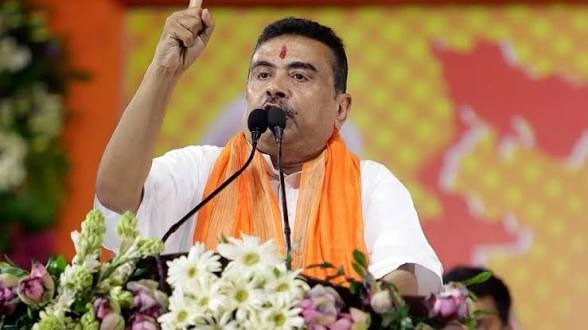
The political atmosphere became even more heated when BJP legislators protested against controversial remarks allegedly made by Humayun Kabir, MLA of the Am Janata Unnayan Party, during a recent public meeting targeting Chief Minister Suvendu Adhikari. Immediately after the session commenced, BJP MLA Utpal Brahmachari from Kaliaganj raised a Point of Order and demanded an official statement from the government on the issue.
Considering the seriousness of the matter, Speaker Rathindra Basu directed Parliamentary Affairs Minister Shankar Ghosh to respond before the House. The Parliamentary Affairs Minister informed the Assembly that Chief Minister and Home Minister Suvendu Adhikari himself would address the issue later during the proceedings.
The passage of the two key OBC amendment bills, the debate surrounding the Uniform Civil Code and the controversy over remarks against the Chief Minister dominating discussions, Monday's Assembly session emerged as one of the most politically significant and contentious proceedings witnessed in the West Bengal Legislature in recent times.
You might also like!