Potato Farmers in Bardhaman Say Only Government Purchase Can Make Cultivation Profitable Amid Price Concerns
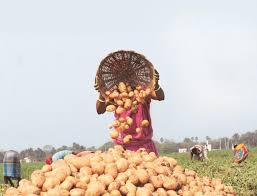
IIE DIGITAL DESK : Farmers in Bardhaman, one of the major potato-producing regions of West Bengal, have sounded the alarm over falling returns on their potato crop and say that cultivating potatoes will be profitable only if the government buys their entire produce at fair prices. With the harvest season approaching and projections showing a large crop, farmers say they are facing deep uncertainty and potentially steep losses if adequate procurement measures are not put in place to protect their livelihoods.
This year’s potato acreage in Purba Bardhaman remains substantial, with roughly 69,000 hectares under cultivation even though total acreage has slightly fallen compared with last year. Agricultural satellite reports expected a sizable output, with estimates pointing to around 1.45 crore quintals — roughly 2.9 crore 50-kilogram bags — of potatoes that could be harvested from the district alone. While a bumper crop is good news in theory, the reality on the ground is far more fraught.
Farmers and producer groups in the region say that without a government guarantee to purchase the entire potato output, most growers will struggle to recover even the cost of production. Many pointed to the state government’s recent announcement that it plans to buy potatoes at an assured price of ₹9.50 per kilogram before the start of the harvest. While this move is welcome, farmers note that the government will only procure selected quality produce, leaving a significant portion of the harvest dependent on private traders.
The cost of potato cultivation on even a single acre can be substantial. Farmers in Bardhaman estimate that inputs such as seed, fertiliser, labour and irrigation easily push the cultivation cost into the tens of thousands of rupees per acre. At the current open-market rates, many growers say they would incur losses if their potatoes fetch only ₹9.50 per kilogram or less once marketing and transport expenses are factored in. Some farmers reported selling freshly harvested tubers at fields earlier this week for approximately ₹280 per 50-kilogram bag — a rate that covers barely the basic input costs when the additional expenses of transporting produce to cold storage are taken into account.
Farmers such as Shyamapada Adure and Majid Rahman from Jamalpur and Memari blocks describe the government procurement plan as a positive step, but also warn that without wider coverage it will not be enough to ensure profitability for all growers. They say that since many potatoes are uneven in quality — with good, average and substandard grades mixed across fields — the volume that qualifies for government purchase will be limited. The rest, they say, will be left to sell to private traders at lower and volatile prices.
Local grower Pradyut Ghosh pointed out that if the government agreed to buy all potatoes at assured prices, farmers would have greater security and livelihoods would improve. “If the government purchased all our potatoes, we would not have to worry about who buys the rest,” he said, explaining that full procurement would substantially reduce farmers’ financial exposure.
Business groups representing potato traders in the district acknowledge that trader purchases are unlikely to match the volume of produce this year. Market conditions have changed due to increased output in neighbouring states and subdued demand from outside West Bengal, making wholesale and long-distance purchases economically unviable for many buyers, according to industry representatives. These market pressures further squeeze the bargaining power of growers at the farm gate.
Some farmers allege that the timing of the government announcement and its structure is politically motivated as the state heads into critical electoral battles, and that more systemic solutions are needed beyond short-term purchase schemes. They argue that without a guaranteed floor price and effective market support that extends beyond select bags of potatoes, continued cultivation of this staple crop could become unsustainable for small and marginal growers — pushing them deeper into debt and distress.
As harvests begin and pressure mounts across Bardhaman’s potato belts, the calls for comprehensive government intervention are growing louder, reflecting broader concerns about agricultural pricing, market access and the future of potato farming in the state.
You might also like!