Jammu & Kashmir Make History, Inspire Indian Cricket with Ranji Trophy Triumph
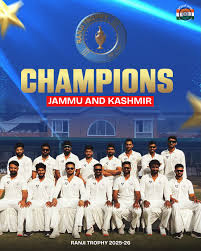
IIE DIGITAL DESK : Jammu and Kashmir have created a historic moment in Indian cricket by clinching their first ever Ranji Trophy title, defeating traditional giants Karnataka in the final in Hubballi to end a 67-year wait for the prestigious domestic crown. After decades of struggle and limited resources, this remarkable achievement has captivated fans across the country and shown how confidence and collective belief can dramatically alter a team’s destiny.
Jammu & Kashmir established a massive 291-run first innings lead over Karnataka and then extended their advantage to 633 runs by the end of the match, forcing a draw that ultimately secured the trophy. The stellar performances with both bat and ball highlighted the team’s balanced strength and deep character.
The star of the bowling attack was fast bowler Auqib Nabi, whose disciplined seam bowling and ability to extract movement off the pitch played a key role in dismantling Karnataka’s batting lineup. Nabi claimed crucial wickets, including top batsmen such as KL Rahul and Karun Nair, showcasing that raw talent combined with steely resolve can outshine experience. His outstanding season saw him among the most prolific wicket-takers, and pundits believe his success could pave the way for future national selection.
Batting contributions were equally significant as openers and middle order batters stood up when it mattered most. Qamran Iqbal played a magnificent innings unbeaten on 160, while Sahil Lotra scored an unbeaten 101 in the second innings to cement the team’s dominance. Earlier, a substantial total in the first innings was built on strong contributions from Shubham Pundir, Abdul Samad, captain Paras Dogra and others, enabling Jammu & Kashmir to seize control early in the final.
The historic triumph is seen as a breakthrough for players hailing from regions often overlooked in the national cricketing narrative. Traditionally, cricketing powerhouses such as Mumbai, Delhi and Chennai have produced the bulk of India’s domestic and international talent, but Jammu & Kashmir’s rise proves that dedication, self-belief and team unity can challenge long-standing hierarchies. The journey from limited infrastructure and few cricket grounds to national champions is nothing short of inspirational.
Indian cricket legends and former captains have weighed in on this landmark success. Former India captain Sourav Ganguly has publicly backed Auqib Nabi for future inclusion in the national team, pointing out that his ability to swing the ball—especially in seam-friendly conditions like those in England—makes him an exciting prospect for higher honors. Such high-profile endorsements highlight just how influential this achievement could be for Jammu & Kashmir cricketers.
The significance of this victory goes beyond one trophy. It marks a turning point in how talent from smaller centres and challenging environments is perceived. In recent years Indian cricket has begun embracing players from rural and emerging regions, and this triumph strengthens that trend. For many young cricketers watching from far-flung corners of the country, Jammu & Kashmir’s success story is proof that perseverance, mental strength, and fearless cricket can open doors to the highest stages.
The people of Jammu & Kashmir, this Ranji Trophy victory is more than a sporting milestone—it’s a moment of pride and a symbol of hope. It reinforces the enduring truth that determination and passion can overcome adversity, inspiring a generation and broadening the horizons of Indian cricket.
You might also like!