
Low-Pressure Rain Disrupts Farming Activities; Ripe Paddy and Winter Vegetables Feared to Be Destroyed in Fields
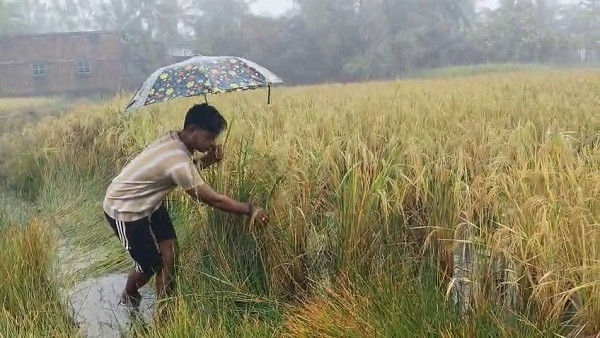
IIE DIGITAL DESK ; North 24 Parganas, November 19: Continuous rainfall triggered by a sudden low-pressure system has raised serious concerns over agricultural losses across large parts of North 24 Parganas, with farmers fearing extensive damage to standing crops. From the border areas of the district to the vast stretches of the Sundarbans, cultivators are facing an increasingly difficult situation as rainwater accumulates in agricultural fields. While waterlogging has disrupted the harvesting of mature paddy, several winter vegetable fields have also been submerged, leaving farmers worried about their livelihoods.
The untimely rainfall has come at a particularly critical stage of the agricultural season. Farmers were preparing to harvest ripe paddy and bring the produce home before the weather deteriorated. However, continuous showers have left many fields waterlogged, making it extremely difficult to enter the agricultural land and carry out harvesting operations. In several areas, mature paddy crops are still standing or lying in the fields, exposed to further rainfall and the possibility of damage.
The timing of the rainfall has become a major cause of concern. At a time when months of hard work were expected to translate into a successful harvest, the sudden change in weather has threatened their hopes of recovering their investment. If the fields remain submerged for an extended period, the quality and quantity of the paddy harvest could suffer considerably.
The situation is equally worrying for farmers growing winter vegetables. Crops such as cauliflower, cabbage, tomatoes, brinjal and radish have been affected by waterlogging in several agricultural areas. These vegetables are important sources of income for local farmers during the winter season. However, prolonged accumulation of rainwater around the roots of the plants can cause rotting and damage, potentially destroying entire sections of cultivated land.
Farmers fear that if the rainfall continues and water does not drain away quickly, the damage could become more extensive. Excess moisture in the soil may affect plant growth, damage roots and reduce the overall productivity of vegetable crops. Even if some plants survive the waterlogging, their growth and quality could be affected, resulting in lower market prices and reduced earnings for cultivators.
The possible impact is not limited to individual farmers. A decline in winter vegetable production could also affect the supply chain and local markets in the coming weeks. If substantial quantities of cauliflower, cabbage, tomatoes, brinjal and radish are lost, the reduced availability of vegetables may push up prices in the market. Consumers could consequently face higher prices, while farmers may struggle to recover the costs of cultivation.
Another concern is the role of middlemen in the agricultural marketing system. Farmers fear that even if they manage to save a portion of their crops, the influence of intermediaries could further reduce their profits. With crop losses already threatening their income, difficulties in marketing the remaining produce may add to their financial burden.
Against this backdrop, demands are growing for an immediate assessment of agricultural damage across the affected areas. Farmers and local residents believe that the administration should review the condition of waterlogged fields, identify the extent of crop losses and take necessary steps to support affected cultivators.
The situation is particularly concerning for farming communities across the border areas and the Sundarbans, where agriculture remains a major source of livelihood for many families. For these cultivators, the unexpected rainfall has brought fresh uncertainty at a crucial time of the year.
The low-pressure system continues to affect agricultural activities, farmers are anxiously watching the weather and hoping that conditions improve soon. From ripe paddy awaiting harvest to winter vegetables struggling under waterlogged conditions, the damage could have serious consequences for rural incomes and food supplies. What should have been a promising harvest season has now turned into a period of uncertainty for thousands of farming families across North 24 Parganas.
You might also like!