Paigah Tombs: Unveiling Hyderabad's Forgotten Heritage
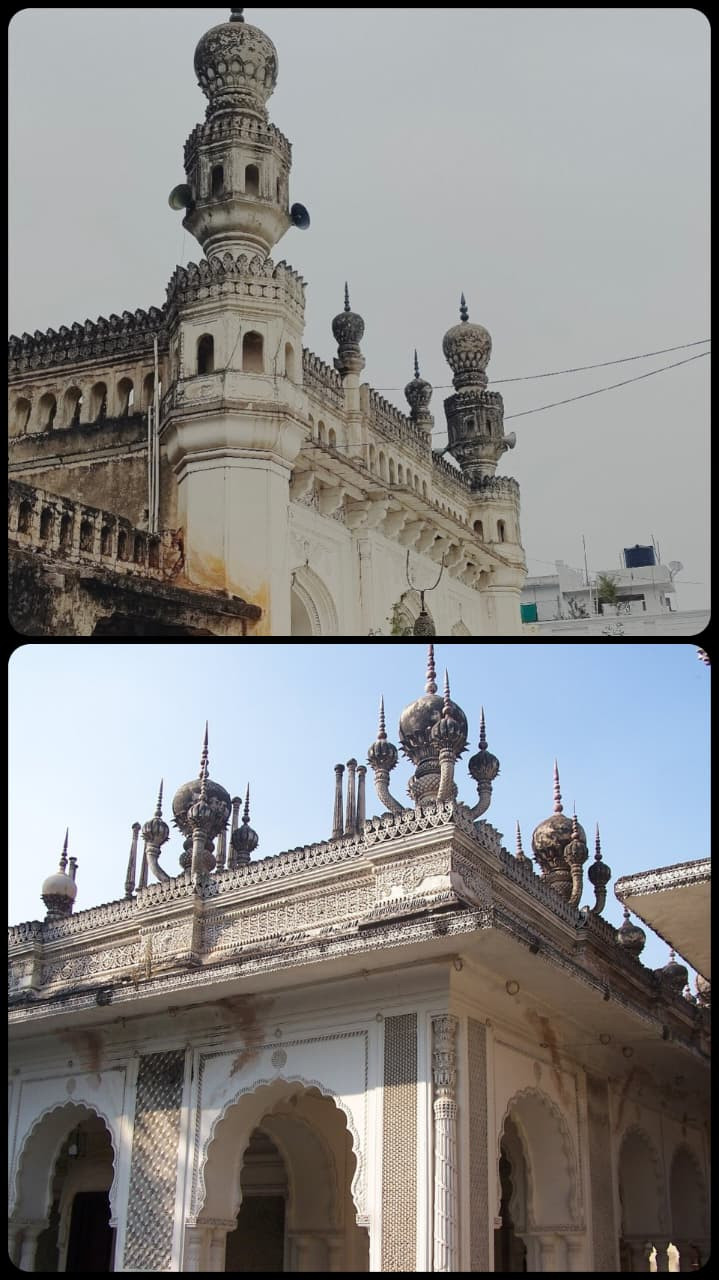
IIE DIGITAL: Located around 4 kilometres east of Hyderabad's iconic Charminar, the Paigah Tombs remain one of the city's most remarkable yet lesser-explored historical landmarks. The sprawling cemetery serves as the final resting place of several generations of the influential Paigah family, whose contribution to the political, military and cultural history of Hyderabad continues to hold great significance.
The Powerful Paigah Dynasty
The Paigahs were the most influential aristocratic family of the erstwhile
Hyderabad State after the Nizams. They maintained their own royal court,
magnificent palaces and a well-equipped standing army comprising nearly 14,000
infantry and cavalry soldiers. The family enjoyed close ties with the ruling
Nizams, with several Paigah nobles marrying into the royal household. The title
"Paigah", derived from the Persian language, signifies rank, prestige
and grandeur. It was first conferred upon Abdul Fateh Khan by the second Nizam,
marking the beginning of one of Hyderabad's most distinguished noble families.
Their prominence continued until Hyderabad was integrated into the Indian Union
in the year 1948.
Origins of the Paigah Tombs
The history of the tomb complex began with the burial of Abdul Fateh Khan
beside the dargah of the revered Sufi saint Burhane Shah. Over the following
generations, his descendants transformed the surrounding land into a grand
necropolis. For more than 150 years, members of the Paigah family and their
spouses, many of whom belonged to the Nizam's family, were buried within the
cemetery, creating one of the finest family burial complexes in India.
An Architectural Masterpiece
The Paigahs were renowned patrons of art, architecture and culture. While
the Falaknuma Palace stands as their most celebrated architectural achievement,
the Paigah Tombs reflect an equally extraordinary level of craftsmanship. The
complex showcases a rare fusion of Mughal, Persian and Deccani architectural
styles, enhanced by influences from Greece, Italy and Turkey. The tombs are
enclosed by intricately carved marble lattice screens, locally known as jallis,
and feature elegant cusped arches, finely carved pillars and exquisite
multicoloured marble inlay work. Unlike conventional enclosed mausoleums, the
tombs remain open to the sky, allowing natural sunlight to illuminate the
intricate carvings and create a captivating interplay of light and shadow
throughout the complex.
Centuries of Neglect
Despite their immense historical and architectural value, the Paigah Tombs
suffered decades of neglect. Rapid urbanisation around Owaisi Nagar led to
heavy encroachments surrounding the heritage site. Many of the delicate marble jalli
screens were damaged, while plaster peeled away over time, weakening the
intricate stucco decorations that once adorned the structures. Years of
insufficient maintenance further contributed to the deterioration of the
monument.
Conservation and Restoration
Recognising the urgent need to preserve the monument, restoration efforts
were initiated after the Covid-19 pandemic through a collaborative project
between the US Ambassadors Fund for Cultural Preservation (AFCP) and the Aga
Khan Trust for Culture (AKTC). Supported by a grant of approximately $250,000,
the conservation programme focuses on restoring the nearly 250-year-old heritage
complex while carefully preserving its original architectural details and
artistic craftsmanship for future generations.
The Paigah Tombs Today
Today, the Paigah Tomb complex continues to stand as a remarkable reminder
of Hyderabad's royal past despite being surrounded by modern urban development.
The site includes a mosque on its western side and an old water reservoir with
a fountain that no longer functions. Beyond the reservoir lies the beautifully
preserved cemetery, housing more than 25 tombs belonging to members of the
Paigah family. Each monument displays exceptional marble inlay work, intricate
decorative jalli screens and finely crafted architectural details.
Although many of the graves remain unmarked, visitors are guided by the site's
caretaker, whose oral narratives offer fascinating insights into the family's
legacy and the rich history of Hyderabad's aristocracy.
A Living Symbol of Hyderabad's Heritage
The Paigah Tombs remain one of the finest examples of India's Indo-Islamic
funerary architecture. Combining historical importance with extraordinary
artistic excellence, the monument reflects the grandeur of a family that played
a defining role in shaping Hyderabad's cultural and political landscape. Today,
it stands not only as a heritage site but also as a reminder of the importance
of preserving the city's rich architectural legacy for generations to come.
You might also like!