Harappa-Mohenjo-daro of Bengal? Discover the Lost Port City Near Kolkata
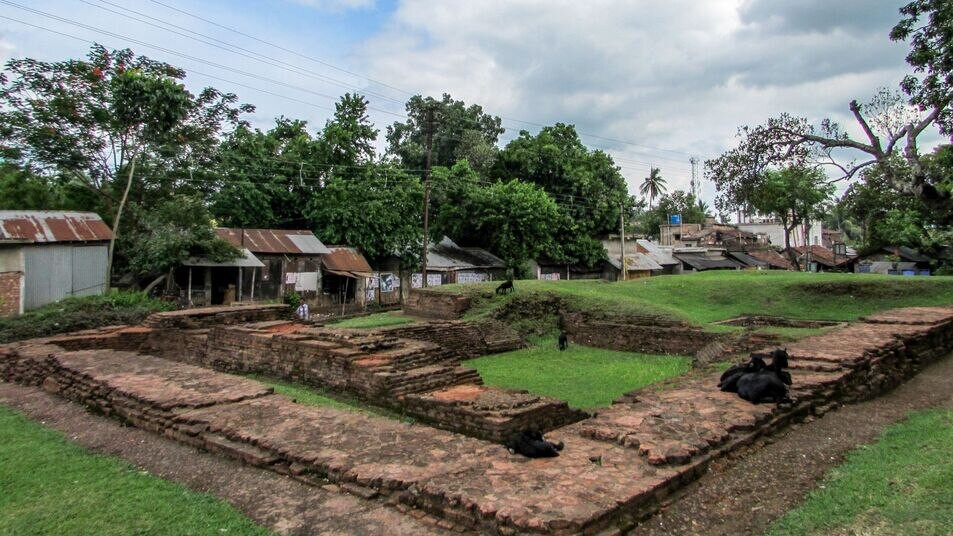
IIE DIGITAL: Just around 35 kilometres from Kolkata lies a place where the remains of an ancient civilisation seem to whisper stories from a distant past. Chandraketugarh, located near Berachampa in North 24 Parganas, is often described as Bengal’s answer to Harappa and Mohenjo-daro, thanks to its remarkable archaeological heritage and the traces of a once-flourishing urban settlement.
Reaching Chandraketugarh from Kolkata involves travelling via Barasat towards Berachampa, from where the route continues towards Haroa. This is not the kind of destination meant for a quick weekend outing filled with entertainment. Instead, it is a place for those fascinated by history, archaeology and the mysteries hidden beneath the soil of ancient Bengal.
Chandraketugarh was once believed to have been a significant port city, maintaining trade connections with different parts of India and even Southeast Asia. Archaeological discoveries, including worn silver coins believed to have circulated widely through the hands of traders and sailors, point towards the settlement’s importance as a centre of commerce. Historians believe that trade was largely dependent on waterways, and satellite imagery has helped archaeologists identify traces of an ancient river channel near the site. Although the river has disappeared over time, its deep course has reportedly left behind evidence of its existence.
The settlement is believed to have flourished between the 2nd century BCE and the 3rd century CE. Its location and extensive trade links may have brought people from different regions and cultures to the area. Archaeological excavations have also revealed evidence of various artistic and architectural traditions, including sculptures associated with the Gandhara style, along with terracotta objects, idols of deities, metal utensils and remnants of an ancient fortified settlement.
The history of Chandraketugarh remains surrounded by several unanswered questions. The origin of its name itself is debated, while some theories associate the settlement with a ruler named Chandraketu. Others have attempted to connect the name with the Mauryan period, though historians have found no clear evidence establishing a direct link between Chandraketu and Mauryan emperor Chandragupta. Excavations, however, have uncovered layers of history stretching from the pre-Mauryan period through later eras, highlighting the site's long and complex past.
Another fascinating chapter of Chandraketugarh’s history is linked to the legendary astronomer Varahamihira and his daughter-in-law Khana, whose famous predictions survive in Bengali folklore as ‘Khanar Bachan’. Near the ancient settlement lies a site popularly known as the Varaha-Mihir mound. Archaeological investigations have identified the mound, which has since been preserved. Local traditions claim that this may have been connected to Khana’s marital home, although the story remains part of the region's enduring historical folklore rather than firmly established fact.
The archaeological remains of Chandraketugarh offer a glimpse into a sophisticated ancient settlement that once played an important role in Bengal’s history. With efforts underway to preserve the site, it continues to attract those eager to explore the region’s forgotten past.
For visitors travelling by train, local services on the Hasnabad or Basirhat routes can be used to reach Haroa Road station, from where an auto-rickshaw can take you towards Chandraketugarh. Those travelling by car can take the Taki Road towards Basirhat and reach Berachampa, from where the route branches towards the archaeological sites. The Khana-Mihir mound is located along Prithiba Road near Berachampa, while Chandraketugarh itself can be reached by taking the Haroa Road from the Berachampa crossing.
You might also like!