India on the Verge of Victory in Colombo Test: How Many Wickets Does Team India Need?

IIE DIGITAL DESK ; Colombo, August 26, 2026: India moved closer to a potentially emphatic victory in the Colombo Test after making further inroads into Sri Lanka’s second innings on the fourth day. At the end of the first session, the hosts were struggling at 83 for two in 22 overs after being forced to follow on, leaving India firmly in control of the contest. The Indian bowlers had already claimed four wickets during the session across the match situation, while Sri Lanka continued to face the enormous challenge of surviving against a dominant Indian attack.
The Colombo Test has been heavily affected by rain from the opening three days, repeatedly interrupting the rhythm of the match and reducing the amount of cricket possible. Weather concerns remained on the fourth day as well, with forecasts suggesting that rain could once again disrupt proceedings in the Sri Lankan capital. With India needing only a handful of wickets to push towards victory, the weather could become the biggest obstacle standing between the visitors and a decisive result.
Sri Lanka began the fourth day with their immediate priority being to avoid the follow-on. At the end of the third day, the hosts had reached 265 for eight in their first innings. India had declared at 503 for nine, giving the visitors a substantial first-innings lead of 238 runs. Sri Lanka therefore required another 39 runs to avoid the follow-on, but only two wickets remained.
India were eventually able to make further breakthroughs, increasing the pressure on the Sri Lankan batting line-up. Once the hosts were dismissed and India secured the opportunity to enforce the follow-on, the match shifted even further in favour of the visitors. Sri Lanka were then required to bat again, and their second innings began with the enormous task of trying to survive long enough to prevent India from completing a comprehensive victory.
Despite the difficult circumstances, Sri Lanka showed some resistance during the second innings. By lunch, they had scored 83 runs for the loss of two wickets in 22 overs. While that represented a better effort compared with their first-innings struggles, India remained in a commanding position. The hosts still had a long way to go if they were to save the Test, while India needed only eight more wickets in the second innings to complete a victory.
The biggest concern for the Indian team, however, could be the weather. According to the AccuWeather forecast, Colombo was facing a very high probability of rain on Wednesday, with the overall chance reportedly reaching as high as 97 per cent. Rain was expected to remain a threat from the morning, raising doubts over whether the day’s play could begin on time.
The forecast suggested an 85 per cent chance of rain around 6am, while the probability was expected to remain around 75 per cent at 9am. Even at 11am, the possibility of showers was forecast to remain at approximately 75 per cent. The chance was expected to fall to 68 per cent around noon and further to 49 per cent at 1pm, offering a brief window of optimism for uninterrupted cricket.
However, that improvement was not expected to last throughout the day. The rain probability could rise again to 56 per cent at 2pm and 63 per cent at 3pm. By 4pm, the possibility was forecast to fall to 45 per cent before increasing again to 53 per cent at 5pm. At 6pm, the chance of rain was again expected to remain around 45 per cent.
The weather had already played a major role in the Test on Tuesday, when nearly an hour of scheduled playing time was lost because of interruptions. With another 98 overs scheduled for the fourth day, India would ideally want enough uninterrupted time to dismiss Sri Lanka and complete the victory. Every lost over, therefore, could become increasingly important as the match moves towards its conclusion.
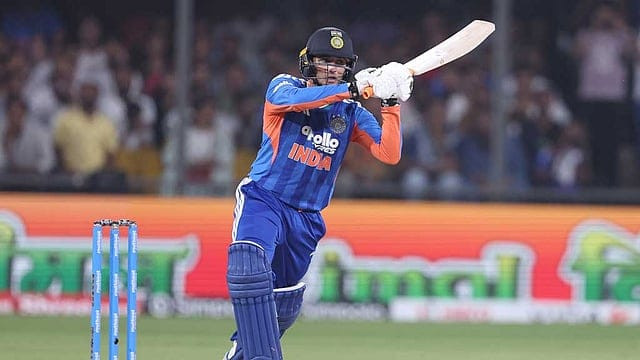
India’s commanding position was built on a remarkable first-innings batting performance. The visitors declared their innings at 503 for nine after producing several outstanding contributions with the bat. Devdutt Padikkal was one of the major stars, scoring an impressive 117, while Dhruv Jurel remained unbeaten on 115 to register another outstanding century.
For Sri Lanka, Asitha Fernando was the most successful bowler during India’s first innings, finishing with four wickets. Nevertheless, India’s enormous total placed tremendous pressure on the hosts and created the foundation for the visitors to dominate the remainder of the Test.
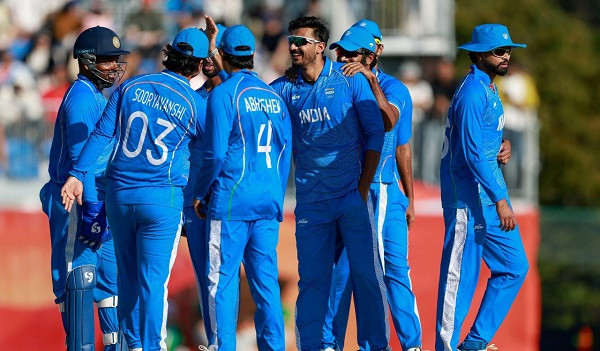
India’s bowling attack has also played a crucial role in maintaining that advantage. Manav Suthar and Prasidh Krishna claimed three wickets each in Sri Lanka’s first innings, while Mohammed Siraj and Ravindra Jadeja contributed one wicket apiece. Their disciplined bowling ensured that Sri Lanka were unable to build a substantial response to India’s huge total.
Now, the equation is relatively straightforward for India. With Sri Lanka already two wickets down in the second innings, the visitors need eight more wickets to seal victory. However, the exact number of wickets required could become less important than the amount of playing time available because rain continues to threaten the contest.
For Sri Lanka, the objective is completely different. The hosts need to concentrate on survival, build partnerships and consume as much time as possible. Every hour without losing a wicket would increase their chances of forcing a draw, particularly if rain continues to interrupt the match.
India, meanwhile, will be desperate to make the most of every available over. Captain and team management will know that the opportunity for an innings victory is firmly within reach, provided the weather allows sufficient playing time. The Indian bowlers will therefore look to strike quickly whenever play resumes.
The Colombo Test has already produced plenty of drama through a combination of dominant batting, disciplined bowling and persistent rain. With India needing only eight wickets in Sri Lanka’s second innings, the visitors are clearly in the driving seat. But with Colombo’s weather threatening further interruptions, the final outcome may depend not only on India’s bowling strength and Sri Lanka’s resistance, but also on how much cricket the fourth day ultimately allows.
You might also like!