International

1 hour ago

US, Saudi Arabia Ink Landmark Nuclear Cooperation Agreement
US-Saudi Energy Partnership


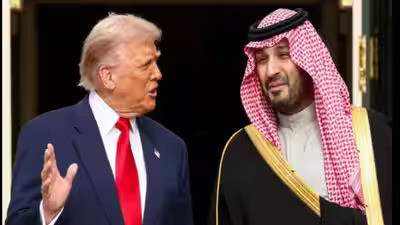
IIE DIGITAL: The United States and Saudi Arabia have signed a landmark agreement on peaceful nuclear cooperation, paving the way for the Gulf kingdom to expand its civilian nuclear energy programme and potentially opening the door to greater involvement by American companies.

The agreement, described by the US Department of Energy as a "peaceful nuclear co-operation agreement", is expected to provide significant opportunities for US firms to participate in Saudi Arabia's nuclear energy sector. A separate bilateral safeguards agreement was also signed as part of the deal.

The full details of the agreement have not been made public. However, reports in US media suggest that the deal could potentially allow Saudi Arabia to enrich uranium in the future. Uranium enrichment is used to produce fuel for nuclear power plants but can also be used to produce material for nuclear weapons, raising concerns among nuclear experts and non-proliferation advocates.

The US Department of Energy said the agreements would establish the legal foundation for a decades-long, multi-billion-dollar partnership between the two countries. Washington has stressed that the deal will maintain strict standards of nuclear safety, security and non-proliferation while strengthening the US civil nuclear industry.

US Energy Secretary Chris Wright defended the agreement, saying it would rely on American nuclear technology and expertise while upholding international standards of safety and non-proliferation.

However, experts have raised concerns over the possibility of Saudi Arabia developing its own uranium enrichment capabilities. Rosemary Kelanic, director of the Middle East programme at the US-based Defense Priorities think tank, said allowing another country to enrich uranium on its own territory would be a significant step for Washington and could increase the potential risk of nuclear weapons proliferation.

The issue has become particularly sensitive because of growing tensions between Saudi Arabia and Iran. The United States and Israel have long expressed concerns over Iran's nuclear programme, while Tehran has denied seeking to develop nuclear weapons. Saudi Crown Prince Mohammed bin Salman previously said that his country did not intend to acquire nuclear weapons but warned that Saudi Arabia could reconsider its position if Iran developed one.

The agreement is now expected to face scrutiny in the US Congress, where lawmakers from both political parties could raise objections. Critics have questioned whether the deal provides sufficient safeguards to prevent Saudi Arabia from eventually developing nuclear weapons technology.

US Secretary of State Marco Rubio has rejected such concerns, insisting that Washington would not sign an agreement that creates a risk of nuclear proliferation. Some Democratic lawmakers, however, have criticised the Trump administration's approach and pointed to Rubio's earlier support for legislation requiring congressional approval of any nuclear deal with Saudi Arabia.

The agreement also marks a significant development in the wider diplomatic relationship between Washington and Riyadh. Saudi Arabia has sought US support for its civilian nuclear ambitions for several years, while previous negotiations reportedly included calls for Riyadh to recognise Israel and establish diplomatic relations with the country. According to US media reports, recognition of Israel does not appear to have been made a condition of the latest nuclear agreement.

The deal could also have major commercial implications. American companies may benefit from opportunities to help develop Saudi Arabia's nuclear infrastructure, including potential facilities for producing nuclear fuel. At the same time, the agreement could strengthen Washington's strategic influence in the Gulf at a time when Saudi Arabia is also seeking closer economic and technological ties with other major powers, including China and Russia.

The proposed arrangement could differ significantly from the US nuclear cooperation agreement with the United Arab Emirates, under which Abu Dhabi accepted restrictions on domestic uranium enrichment and reprocessing. If Saudi Arabia is eventually permitted to enrich uranium domestically, the move could set a new precedent for US nuclear cooperation in the region.

While the agreement does not mean that Saudi Arabia is developing nuclear weapons, experts warn that access to sensitive nuclear technology could potentially create a future pathway towards weapons development. Any such move could face international opposition and further intensify an already complex regional security environment.

The landmark agreement therefore represents both a major strategic victory for Saudi Arabia and a significant expansion of US-Saudi relations. Its long-term impact will depend on the final terms, safeguards and conditions governing Saudi Arabia's nuclear programme. If domestic uranium enrichment is ultimately permitted, the deal could have far-reaching consequences for the future of nuclear energy and security across the Middle East.

You might also like!