America Launches Strike on Iran, Tehran Warns of Retaliatory Response
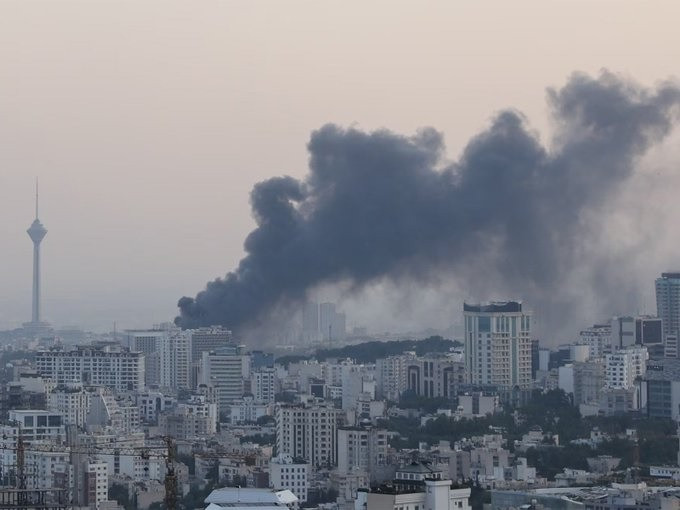
IIE DIGITAL DESK ; Washington and Tehran, June 10: The United States has once again carried out a military strike against Iran, further escalating tensions in the region. Tehran has also issued a strong warning of retaliation. According to reports, a U.S. military Apache helicopter crashed near the Strait of Hormuz on Tuesday. The U.S. military has alleged that the helicopter came under attack from Iranian forces, prompting Washington to respond with military action.
Statements released by U.S. authorities, the operation was conducted on June 9 under the direction of the Commander-in-Chief. The United States Central Command (CENTCOM) described the action as a defensive strike aimed at protecting American personnel and assets in the region. CENTCOM stated that U.S. Air Force and Navy aircraft used precision-guided weapons to target Iranian air defense systems, ground control stations, and surveillance radar facilities located near the strategically important Strait of Hormuz.
The U.S. military further claimed that the strikes were intended to counter what it described as Iran’s unjustified aggression. Officials emphasized that American forces remain vigilant and fully prepared to respond to any threats against U.S. interests and personnel operating in the region.
Iran responded with a stern warning directed at Washington. Iranian Foreign Minister Abbas Araghchi stated that despite what he described as failures on the battlefield, the United States had chosen to test Iran’s resolve. He declared that Iran’s armed forces would not leave any attack or threat unanswered and stressed that the country was fully prepared to defend its sovereignty and national interests.
Araghchi further warned that if the United States wished to ensure the safety of its forces, it should leave the region. Referring to the long history of the Persian Gulf, he said that there are numerous examples of foreign powers facing disastrous consequences after intervening in the area. His remarks underscored Tehran’s determination to respond forcefully to any military pressure or aggression.
The latest exchange of accusations and military actions has raised concerns about the possibility of a broader confrontation in the Middle East. With both sides adopting increasingly aggressive rhetoric, international observers are closely monitoring developments around the Strait of Hormuz, one of the world’s most critical maritime trade routes.
You might also like!