
West Asia War Triggers Massive Market Crash in India as Dalal Street Faces ₹3 Lakh Crore Loss
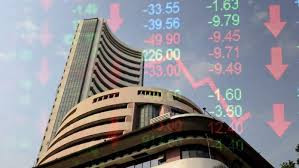
IIE DIGITAL DESK : The ongoing war situation in West Asia has created serious financial instability in the Indian stock market, leading to a sharp decline in major indices such as BSE Sensex and Nifty 50. Investor anxiety has increased as geopolitical tensions involving Iran, United States and Israel continue to escalate in West Asia. The financial centre of Indian trading, Dalal Street, witnessed heavy selling pressure during the week.
After the market opened this week, both benchmark indices started showing a downward trend. Although there was temporary recovery on Thursday, the market again fell sharply on Friday, intensifying concerns among investors. At the close of trading, the market recorded a massive loss of approximately ₹3 lakh crore in total valuation. The Bombay Stock Exchange benchmark index Sensex fell by 1097 points, representing a decline of 1.37 percent, settling at around 78,918 points. Over the week, the index has lost nearly 3.5 percent overall.
Similarly, the National Stock Exchange of India benchmark index Nifty 50 also experienced significant pressure, falling by 315 points or 1.27 percent to close at approximately 24,450 points. Market analysts noted that mid-cap and small-cap segments also witnessed widespread selling activity during the session, reflecting negative investor sentiment across sectors.
Interestingly, only a few sectors showed relative stability. Defence-related stocks in India, along with energy and information technology sectors, managed to resist the broader market decline. However, most other sectoral indices closed in negative territory, highlighting the widespread impact of global uncertainty.
Experts believe that the primary driver behind the market crash is the West Asia conflict involving military tensions between Iran and the US-led alliance. The war that began around February 28 has gradually intensified, creating fear among global investors. Foreign institutional investors have reportedly started withdrawing capital from emerging markets, adding additional pressure on Indian equities.
Rising crude oil prices have further worsened the situation. Since India is heavily dependent on imported energy, any increase in global oil prices directly impacts domestic inflation and corporate profitability. The depreciation of the Indian rupee against the US dollar has also added economic pressure, increasing import costs and reducing foreign investment attractiveness.
Market analysts suggest that global stock markets are currently operating under negative sentiment due to geopolitical uncertainty. Similar downturns have been observed in several major international markets, indicating the widespread economic consequences of the West Asia war.
Financial experts warn that unless geopolitical tensions reduce, market volatility may continue in the coming weeks. Investors are advised to remain cautious and focus on long-term investment strategies amid ongoing global uncertainty.
You might also like!