Industrial Chimneys in Bihar Are Now Writing a New Story of Hope
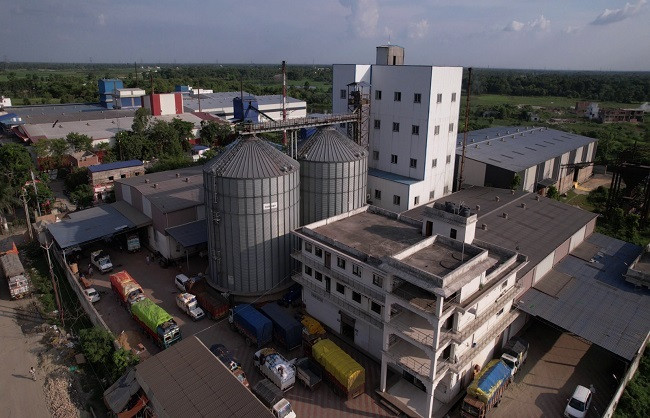
IIE DIGITAL DESK ; Patna, November 26: The sight of young people carrying bags at railway stations after major festivals has reflected one of Bihar’s biggest challenges — the lack of adequate employment opportunities and the large-scale migration of workers to other states in search of jobs. However, the state is now taking significant steps to change this longstanding picture. Industrial chimneys rising across Bihar are increasingly becoming symbols of a new economic ambition, with investments, new factories and thousands of potential employment opportunities bringing fresh hope to the state.
Figures released by the Bihar Industrial Area Development Authority (BIADA) indicate that the state's industrial development drive is gradually moving beyond announcements and policy commitments. Companies are coming forward with investment proposals, industrial units are being established and several projects are progressing towards implementation. The developments are expected to strengthen Bihar's industrial base and create new employment opportunities for its young population.
BIADA data, 40 major industrial units are being established in industrial areas developed by the authority, involving proposed investments of approximately Rs 21,600 crore. These projects are expected to generate around 23,000 direct jobs. In addition, 19 major industrial units are either being established or are already operational outside BIADA's industrial areas. The expansion of industrial activities has reached 17 districts, including Patna, Muzaffarpur, Gopalganj, Begusarai, Bhagalpur, Madhubani, Purnia, Buxar, Nawada, Munger, Khagaria, Samastipur, Banka, Araria, Vaishali, West Champaran and Kaimur.
Several prominent industrial groups from across the country are also investing in Bihar. In the cement sector, Ambuja Cement has projects in Nawada and Muzaffarpur, UltraTech Cement is associated with projects in Banka and Bhagalpur, while JK Lakshmi Cement has a project in Madhubani. These investments are expected to strengthen the state's construction-materials industry and support the growing demand for infrastructure development.
The power and energy sector is also witnessing significant activity. Adani Power is developing a thermal power plant at Pirpainti in Bhagalpur. According to the estimates provided, the project is expected to generate employment for around 8,100 people during the construction phase and approximately 2,300 jobs once commercial operations begin. Such large-scale projects are expected to create opportunities not only for skilled workers but also for local service providers and businesses.
Food processing is emerging as another important area of industrial expansion. Major names such as Haldiram, Mother Dairy, ITC and Varun Beverages, along with Kaira Milk Union associated with Amul, have projects in the state. The participation of established companies is expected to give a boost to food manufacturing, dairy processing and the organised food industry in Bihar.
The petroleum and green-energy sectors are also attracting investment. Bharat Petroleum has an LPG bottling plant project at Hathua, while Reliance has a biogas project planned in Madhubani. Projects associated with HPCL Renewable are also part of the state's emerging energy landscape. In the technology sector, data centre projects by CtrlS and Bharti Airtel are being established in Patna. Meanwhile, companies such as Supreme Industries and Prince Pipes are investing in the plastics and piping industry.
From farms to factories, industrial opportunities are expanding
One of Bihar's greatest strengths is its fertile agricultural land and hardworking farming community. Recognising this potential, the state's industrial development strategy is placing considerable emphasis on connecting agricultural production with manufacturing and processing industries. Food processing is consequently emerging as a key driver of industrial growth.
BIADA's industrial areas alone have 13 food-processing units. These include maize-based industries and starch production facilities in Khagaria, flour, refined flour and makhana processing units in Araria, a dairy plant in Munger and units manufacturing savoury snacks, biscuits and beverages in Patna and Bihta.
The expansion of these facilities could bring significant benefits to farmers. Instead of depending entirely on distant markets, agricultural producers may increasingly find buyers and processing facilities in their own districts or neighbouring areas. Local processing is expected to reduce transportation difficulties, improve market access and create better possibilities for farmers to secure competitive prices for their produce.
Ethanol and biogas are also becoming important components of Bihar's industrial development plans. Ethanol plants are being established in Muzaffarpur, Buxar, Begusarai and Gopalganj. Meanwhile, compressed biogas (CBG) projects are planned in Madhubani, Muzaffarpur and West Champaran.
These projects could help convert agricultural waste into useful energy resources. Such initiatives have the potential to promote cleaner energy, reduce waste and provide farmers with additional income opportunities through the productive utilisation of agricultural residues.
Industrial development is spreading beyond Patna
Bihar's industrial strategy is the effort to ensure that development does not remain concentrated in Patna alone. The state has been divided into nine industrial clusters — Patna, Bihta, Hajipur, Motipur, Darbhanga, Begusarai, Purnia, Gaya and Bhagalpur — with the objective of promoting industrial activity across different regions.
The broader vision is to create employment opportunities in Mithilanchal, the Kosi-Seemanchal region, Magadh and the Bhojpur belt, allowing young people to find work closer to their homes. If these plans translate into sustained industrial activity, they could help reduce the pressure of migration to other states.
The proposed industrial landscape covers a wide range of sectors, including cement, power, textiles, solar modules, electronics, biosensors and logistics. Textile-related development is planned at Pandaul, while a solar module project is proposed at Bariyarpur. Sikandarpur is being considered for electronics and biosensor industries, while logistics parks are planned in Bhagalpur and Hajipur. A plastic recycling park has also been proposed in Madhubani.
The diversity of these projects indicates that Bihar is seeking to build an industrial ecosystem rather than depend on a single sector. The expansion of manufacturing, renewable energy, food processing and logistics could create employment opportunities for people with different educational qualifications and skill sets.
Government initiatives and projects moving towards reality
For any company, investing thousands of crores of rupees in a new industrial project is a major decision. Investors generally look for reliable infrastructure, including land availability, uninterrupted electricity, road connectivity and a stable industrial policy before committing substantial funds.
The progress of industrial projects in Bihar is closely linked to efforts to improve these essential facilities and create a more favourable environment for businesses. According to the information provided, production has already commenced at several industrial units following land allotment, while construction work is progressing rapidly at many other project sites. A number of companies have also received land allotments and are preparing to move into the next stage of development.
The gradual movement of projects from investment proposals to construction and production marks an important phase in Bihar's industrial journey. However, the real measure of success will lie in how effectively these investments translate into operational factories, sustainable employment and stronger local economies.
State that has long witnessed the migration of young workers in search of livelihoods, the expansion of industrial activity offers a significant opportunity. If the projects are completed on schedule and generate the expected employment, Bihar could gradually transform its economic landscape, giving its youth more reasons to build their futures within the state rather than leave in search of work elsewhere.
The industrial chimneys rising across Bihar are therefore becoming more than symbols of factory expansion. They represent the possibility of a new chapter — one in which investment, local enterprise and employment generation could help turn the state's long-standing challenge of migration into a story of opportunity and hope.
You might also like!