Iran Is Financially Collapsing, Claims Donald Trump; Alleges Tehran Desperate Over Strait of Hormuz
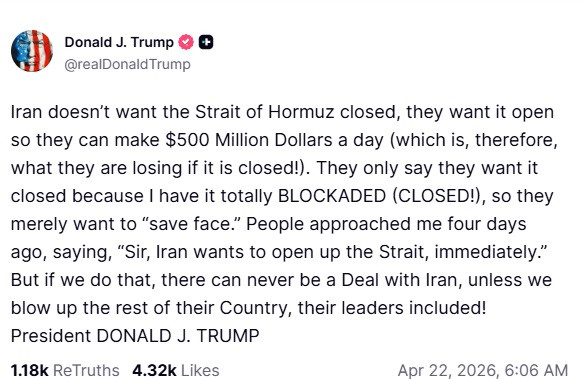
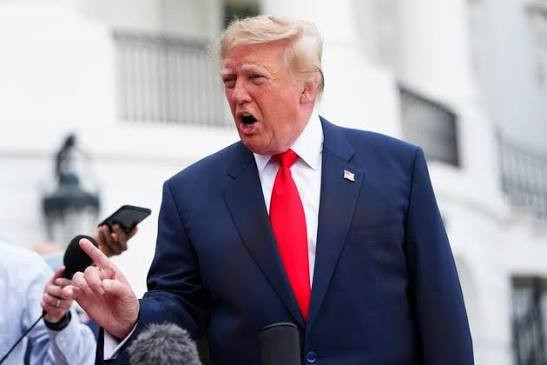
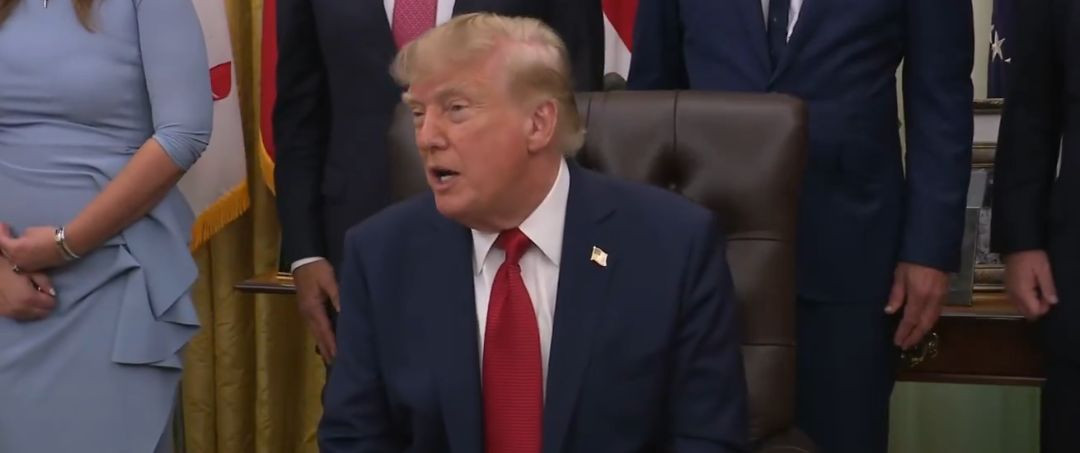
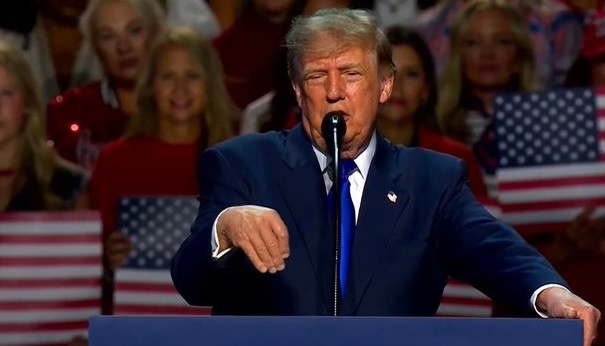
IIE DIGITAL DESK : Washington, April 22: United States President Donald Trump has claimed that Iran is on the brink of financial collapse, asserting that mounting economic pressure has left Tehran struggling to sustain its revenues and meet internal obligations. In a strongly worded post on the social media platform Truth Social, Trump alleged that Iran is losing hundreds of millions of dollars daily and is urgently seeking relief linked to the strategic Strait of Hormuz.
“Iran is financially collapsing,” Trump wrote, alleging that the country is losing approximately 500 million dollars a day. He further claimed that Iran is demanding the immediate reopening of the Strait of Hormuz due to severe cash shortages. According to the former president, Iranian military and police forces are reportedly complaining about not receiving their salaries amid the economic strain.
Trump went on to argue that Tehran does not actually wish to keep the Strait of Hormuz closed, contending instead that it wants the waterway open to generate daily revenues of nearly 500 million dollars. He suggested that Iran’s stance on the strait is motivated by economic survival rather than strategic leverage, stating that any attempt to portray defiance is merely an effort to “save face.” Trump further claimed that he had effectively blocked Iran’s ability to benefit from the strait, adding that unnamed individuals had recently informed him that Iran wanted the passage reopened immediately.
The Strait of Hormuz, located between Oman and Iran, is one of the world’s most critical oil transit chokepoints, through which a significant portion of global crude shipments pass. Any disruption to maritime traffic in the region has far-reaching implications for global energy markets and geopolitical stability. Tensions surrounding the waterway have frequently escalated amid strained relations between Washington and Tehran, particularly over sanctions and nuclear policy.
Trump’s remarks also touched upon broader negotiations with Iran, suggesting that reopening the strait under current circumstances would undermine the possibility of any future agreement. In his post, he indicated that no deal with Iran would be feasible unless drastic measures were taken, including targeting the country’s leadership and infrastructure, a statement that is likely to further inflame diplomatic sensitivities.
The comments come against the backdrop of longstanding economic sanctions imposed on Iran, which have significantly impacted its oil exports, currency stability and overall economic growth. Tehran has repeatedly denied claims of systemic collapse, maintaining that it continues to manage its economy despite external pressure.
While there has been no immediate official response from Iranian authorities to Trump’s latest assertions, the remarks underscore the continuing volatility in US-Iran relations. Analysts note that rhetoric surrounding the Strait of Hormuz often triggers concerns in global markets, given its strategic importance to international trade and energy supply chains.
The geopolitical tensions persist, statements from key political leaders are closely watched for signals of escalation or potential diplomatic engagement. Trump’s latest claims add another layer of intensity to an already fragile regional equation, with the Strait of Hormuz once again at the center of global attention.
You might also like!