Dream of Exploring Space? Astrophysics Could Be Your Launchpad

IIE DIGITAL: For students fascinated by galaxies, black holes and the mysteries of the universe, astrophysics has emerged as one of the most exciting career choices. Blending theoretical science with cutting-edge research, the field focuses on understanding the origin, structure and evolution of celestial objects using the principles of physics and mathematics.
Astrophysics is a specialised branch of physics that studies stars, planets, galaxies, dark matter, black holes and other cosmic phenomena. By applying the laws of classical and modern physics, astrophysicists seek to explain how the universe works and uncover the secrets hidden in deep space.
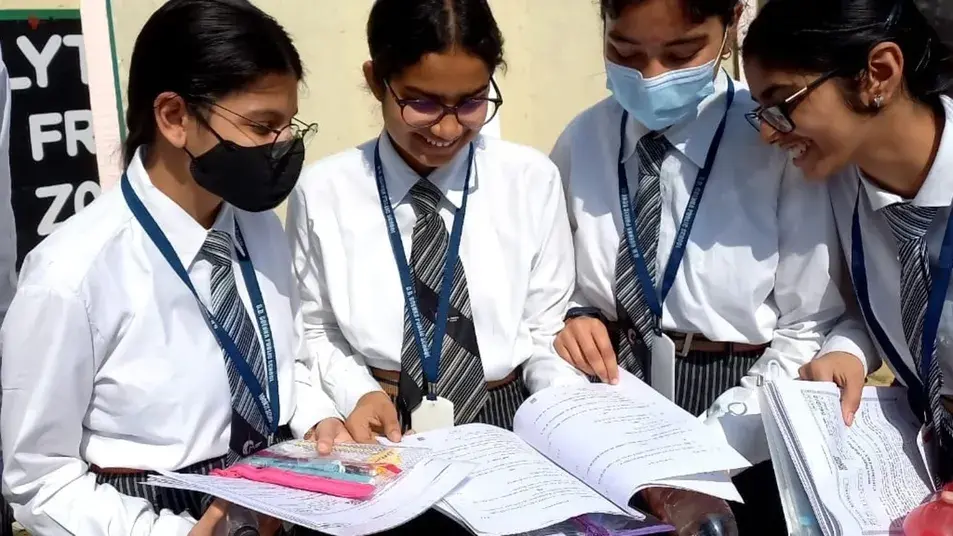
Students aspiring to enter the field should opt for the Science stream with Physics and Mathematics in higher secondary education. Most institutions require at least 50% marks in the qualifying examination, followed by success in competitive entrance tests. Apart from engineering entrance exams, candidates can also appear for examinations such as JEST (Joint Entrance Screening Test) and institute-specific admission tests offered by leading research organisations.
India offers several prestigious institutions for higher studies in astrophysics and astronomy, including the Indian Institute of Astrophysics (IIA), Inter-University Centre for Astronomy and Astrophysics (IUCAA), Indian Institute of Space Science and Technology (IIST), Bose Institute, Harish-Chandra Research Institute and the S.N. Bose National Centre for Basic Sciences. Many students also pursue research opportunities through ISRO and other national space science programmes.
Career prospects in astrophysics have expanded significantly in recent years. Graduates and postgraduates can build careers as research scientists, observational astrophysicists, theoretical astrophysicists, space scientists and academic researchers. Advanced research positions generally require a master's degree or PhD, opening opportunities in research laboratories, universities and international space agencies.
The scope of astrophysics, however, extends far beyond space research. The field equips students with expertise in data analysis, programming, statistical modelling and algorithm development, skills that are increasingly valued by technology companies, AI firms, financial institutions and data analytics organisations. Many astrophysics graduates also work as data scientists, software engineers, systems analysts and instrumentation specialists, making it one of the most versatile science careers today.
With India's growing investment in space exploration and the global demand for highly skilled researchers and data professionals, astrophysics is steadily becoming a rewarding career for students who dream of turning their curiosity about the cosmos into a profession.
You might also like!