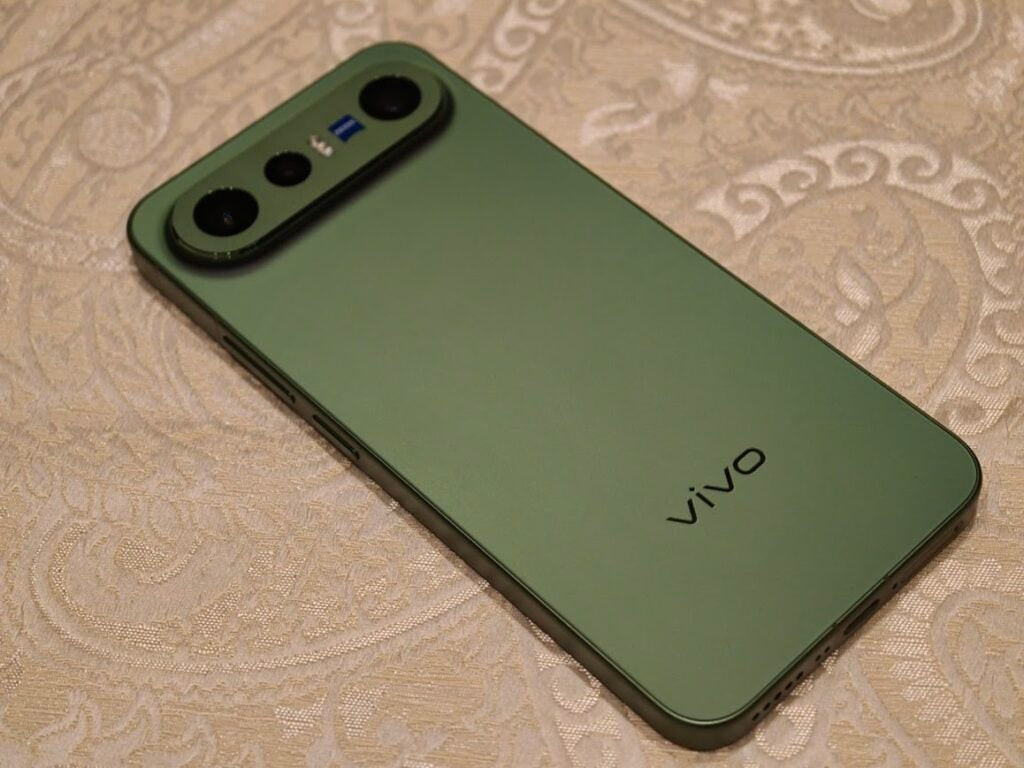
100% Charge in the Morning, Phone Dead by Afternoon? Why Even a 6000mAh Battery Doesn’t Last?
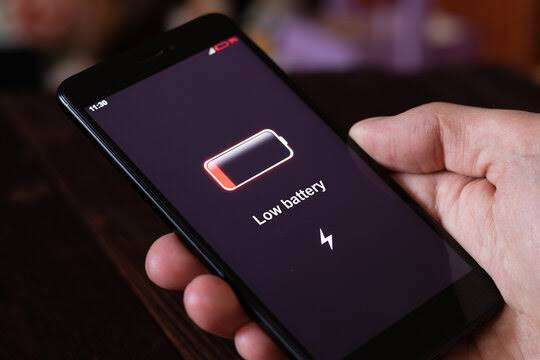
IIE DIGITAL DESK ; October 5: Imagine leaving home with your smartphone fully charged at 100 per cent, only to see the dreaded “Low Battery” warning before the afternoon is even over. Frustrating, isn't it? When buying a new smartphone, many people feel reassured when they see a 5,000mAh or 6,000mAh battery listed in the specifications. The assumption is simple: a bigger battery should mean that the phone will easily last throughout the day without needing another charge. However, real-world battery performance can be very different.
The key point is that battery capacity and battery life are not the same thing. The large number written in a phone's specifications does not automatically guarantee all-day battery life. Battery capacity refers to how much electrical charge the battery can store, while battery life refers to how long that stored energy actually lasts during everyday use.
A simple way to understand the difference is to imagine a large water tank on the roof of a house. The size of the tank represents the phone's battery capacity. In smartphones, battery capacity is generally measured in milliampere-hours or mAh, while laptop battery capacity is commonly expressed in watt-hours or Wh.
Battery life, on the other hand, depends on how quickly that stored energy is consumed. A smartphone may have a large battery, but if the user spends hours playing high-graphics games or continuously watching videos, the charge can still disappear quickly. Similarly, taking photographs outdoors under strong sunlight can cause the phone to heat up, which may accelerate battery drain.
Several other hardware and software factors also influence battery performance. Screen size, display brightness, processor efficiency and the type of applications running in the background can all affect how long a smartphone remains powered on. As a result, two phones with similar battery capacities may offer very different real-world battery life.
There is also a common misconception about power banks. For example, some users may assume that if an iPhone has a 4,288mAh battery, a 10,000mAh power bank should be capable of fully charging it at least twice. On paper, the calculation may appear straightforward, but in practice it does not work that way. During the transfer of energy from a power bank to a smartphone, some of the energy is lost, largely as heat. Around 20 to 30 per cent of the stored energy can be lost depending on the devices and charging conditions. Energy losses can be even higher during certain fast-charging or wireless-charging situations.
Battery performance also changes as a phone gets older. A new smartphone may hold its charge well, but its battery gradually loses its ability to retain the same amount of energy over time. This happens because lithium-ion batteries naturally degrade with repeated use and charging.
A complete charge cycle is generally counted when the equivalent of 100 per cent of the battery's capacity has been used, although this does not necessarily mean the phone must be charged from zero to 100 per cent in one go. Battery health gradually declines as charge cycles accumulate. Companies such as Google, including for devices in the Pixel range, indicate that batteries can retain around 80 per cent of their original capacity after a substantial number of charge cycles, depending on the specific model and usage conditions.
This is why charging habits can make a difference to long-term battery health. Users are generally advised not to regularly run their phone completely down to zero and, where practical, to avoid keeping it at 100 per cent for prolonged periods. Keeping the battery roughly within the 20 to 80 per cent range can help reduce battery stress. Lowering screen brightness when maximum brightness is unnecessary and restricting unnecessary background applications can also help extend daily battery life.
Users should also keep an eye on the battery health information available in their smartphone settings. If battery health has fallen significantly, particularly below around 80 per cent of its original capacity, the device may no longer deliver the same level of performance and replacing the battery may be worth considering.
Meanwhile, the smartphone industry is also looking towards newer battery technologies. Silicon-carbon batteries are emerging as a promising option because they can potentially offer higher energy density while maintaining a compact physical size. This could allow future smartphones to store more energy without requiring proportionately larger batteries.
Until such technologies become more widely available, however, everyday usage habits remain important. A 5,000mAh or 6,000mAh battery can provide excellent endurance, but battery size alone does not determine how long a phone will last. Managing screen brightness, demanding applications, background activity, charging habits and battery health can make a significant difference and may help prevent the frustration of seeing the battery run out unexpectedly in the middle of the day.
You might also like!