‘Footpath Encroachment Has Become a Fashion in Bengal, People Are Now Adjusting’: Dilip Ghosh Reacts to Milk-Heating Controversy
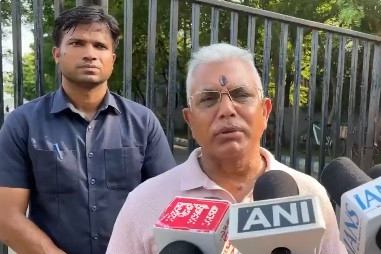
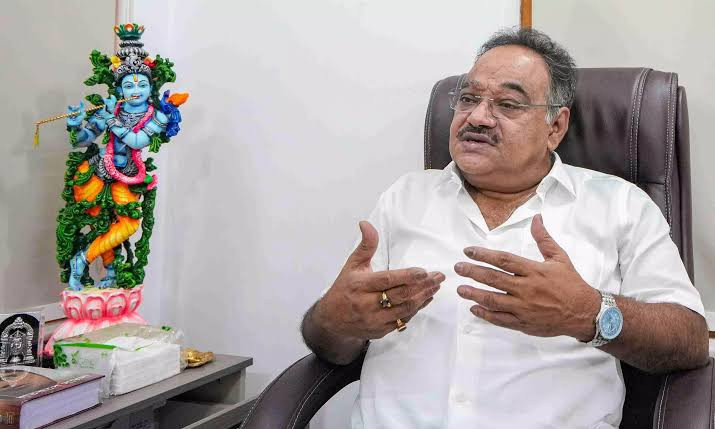
IIE DIGITAL DESK ; Kolkata, August 26, 2026: The controversy surrounding a pavement-dwelling family and a minister’s objection to heating milk on a roadside footpath has refused to die down, with West Bengal Panchayat and Rural Development Minister Dilip Ghosh now weighing in on the wider issue of pavement encroachment across the state. Ghosh described pavement occupation as a “fashion” in West Bengal and argued that political leaders had allowed the problem to continue for years for their own political convenience.
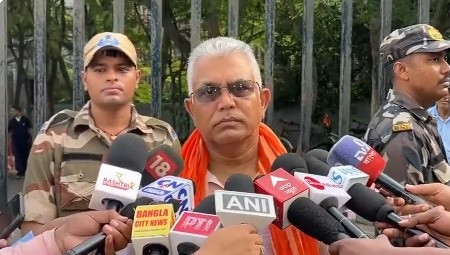
Speaking on Wednesday, Ghosh said that footpaths across Bengal needed to be cleared to restore space for pedestrians and ease pressure on increasingly congested roads. He also suggested that people were gradually beginning to understand the need for such measures and were “adjusting” to the changing situation.
“Footpath encroachment has become a fashion in West Bengal. Political leaders did not remove these encroachments for so long because of their own interests. But this has to be done,” Ghosh said, stressing that the government could not ignore the growing problem indefinitely.
The latest controversy began during a pavement-clearing drive led by West Bengal Urban Development Minister Agnimitra Paul. The BJP-led government has been pushing for the removal of illegal occupations from footpaths and other public spaces, arguing that pedestrians need unobstructed access and that encroachments contribute to traffic congestion.
During one such inspection near Park Street, Paul reportedly spotted a woman heating milk for her child on the pavement. The minister objected strongly and instructed the family to stop heating milk in the open roadside area. The incident quickly attracted public attention and triggered criticism over the manner in which the issue was handled.
The situation became more complicated when it emerged that the family did not have a permanent home and had been living on the pavement. The family’s circumstances prompted questions over whether enforcement action should be accompanied by arrangements for alternative accommodation for vulnerable pavement dwellers.
Paul maintained that living on a pavement could not justify using a public road or footpath in a manner that could potentially create safety concerns. However, the episode generated a broader debate about the treatment of homeless families and the government’s responsibility towards people living without secure housing.
The controversy eventually reached Chief Minister Suvendu Adhikari’s public grievance forum. On Tuesday, MLA Sajal Ghosh accompanied the family to the Chief Minister’s “Janatar Darbar”, where the issue was brought directly before the state government.
Following the appeal, the Chief Minister directed the Kolkata Municipal Corporation to make arrangements to find safe accommodation for the family. The assurance appeared to provide a possible resolution to the immediate humanitarian aspect of the controversy, although the larger political debate over pavement encroachment continued.
Ghosh said that while providing shelter to the particular family was important, the government also had to address the broader problem affecting pavements throughout the state. He argued that the rapid increase in vehicles and pedestrian movement had made it increasingly difficult for cities to function efficiently when public walkways remained occupied.
“Vehicles have increased and the movement of people has increased. When roads become narrower, everyone faces difficulties,” Ghosh said. According to him, removing encroachments from roads and footpaths would create additional usable space and improve movement in congested urban areas.
The minister also said that he had met the family involved in the controversy and claimed that they had expressed faith in the Chief Minister. According to Ghosh, the family had not made allegations against anyone and was hopeful that the government would help resolve its housing problem.
His comments came as the state government continued its campaign to reclaim public spaces from illegal or unauthorised occupation. BJP leaders have repeatedly argued that the drive is necessary to improve pedestrian safety, reduce traffic congestion and restore the intended use of footpaths.
The enforcement campaign, however, has also raised questions about how authorities should distinguish between commercial encroachment and people who occupy pavements because they have nowhere else to live. While clearing pavements can improve public mobility, removing vulnerable families without providing alternative shelter could create serious humanitarian concerns.
The recent milk-heating episode brought that tension into sharp focus. What initially appeared to be a routine enforcement action quickly turned into a debate about poverty, homelessness, urban governance and the rights of pedestrians.
Ghosh maintained that the government’s objective should ultimately be to make cities cleaner, safer and easier to navigate. He appealed to residents to cooperate with the authorities as the pavement-clearance campaign progresses.
“We are also appealing to everyone to come together and make the city a little cleaner,” Ghosh said, acknowledging that completing the process would take time. He also claimed that members of the public were increasingly cooperating with the administration.
The government now faces the challenge of maintaining its drive against encroachment while ensuring that vulnerable pavement dwellers are not left without alternatives. The promise of accommodation for the family at the centre of the controversy may provide an immediate solution, but the larger question of thousands of people living on pavements remains unresolved.
Kolkata and other urban areas continue to grapple with rising traffic, crowded streets and limited pedestrian space, the debate over pavement encroachment is likely to remain politically sensitive. The latest remarks from Dilip Ghosh have ensured that the controversy surrounding a simple act of heating milk has evolved into a much wider discussion about public spaces, homelessness and the responsibilities of the government towards both pedestrians and the urban poor.
You might also like!